




AwardWallet receives compensation from advertising partners when you visit our site, click on a link, when you are approved for a credit card, or when an account is opened. Terms Apply to the offers listed on this page. Enrollment is required for select Amex benefits. The opinions expressed here are our own and have not been reviewed, provided, or approved by any bank advertiser. Here's our complete list of Advertisers. Offers for Bank of America cards mentioned in this post have been updated as of 09/14/2026
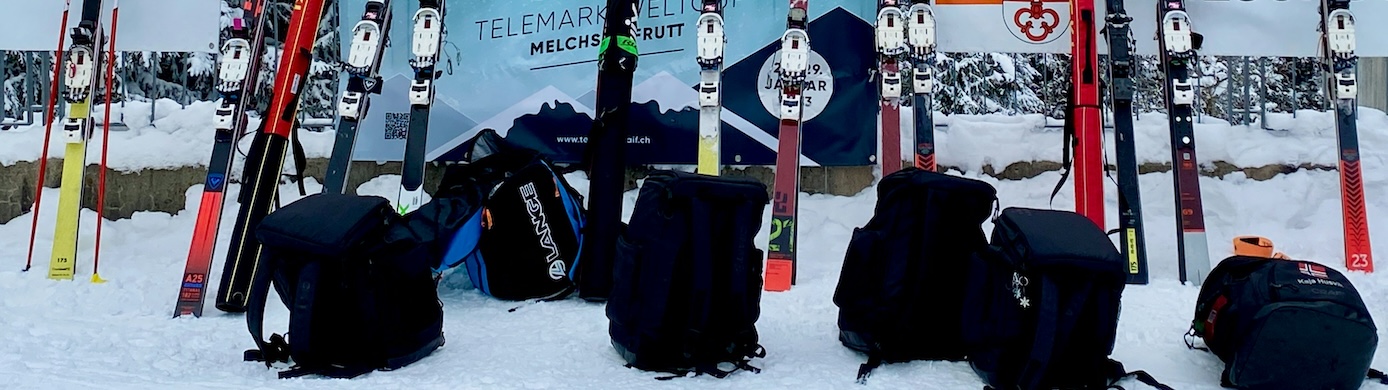
Now that the first flakes of winter are upon us, you may be salivating for the upcoming ski season. Using points and miles can make skiing around the country — and world for that matter — more accessible and affordable. Resorts aren't the only mountains you will encounter on your ski trip though. It usually requires mountains of bags and equipment when you are getting on a plane to hit the slopes.
Luckily, many airlines offer clear and customer-friendly ski and boot checked bag policies. With the prevalence of fees to check bags, flyers need to be ever more cognizant of what it will cost to check their ski equipment. We will look at various U.S.-based airlines' policies so you will be well-informed.
Note that I use the terms ski and boot bag for the purpose of our discussion. Don't be offended snowboarders: The policies typically apply to both, so the language can be used interchangeably.
Alaska Airlines
- One pair of skis with poles or one snowboard, plus one boot/helmet bag will count as one item.
- Ski/snowboard equipment exceeding 115 inches (linear) will incur an oversize fee. Ski/snowboard equipment exceeding 50 pounds will incur an overweight fee.
- Bag fees start at $40 for the first checked bag ($35 prepaid), $45 for a second bag
American Airlines
- One pair of skis or one snowboard and one equipment bag will count as one checked item.
- Standard checked bag fees of your destination apply up to 50 pounds for the combination of the two bags. Over 50 pounds will count as two checked bags and overweight fees apply. Oversize fees do not apply however.
- Bag fees start at $40 for the first checked bag, $45 for a second bag
Related: American Airlines Checked Baggage Fees
Delta Air Lines
- One ski/pole bag or one snowboard bag, plus one boot bag are accepted per person as one item.
- If the combined weight of ski/snowboard bags and boot bag weighs over 50 pounds, the applicable excess weight fee will be charged.
- If the outside linear dimensions (length + width + height) exceed 115 linear inches (292 cm), the item will not be accepted.
- Bag fees start at $35 for the first checked bag, $45 for a second bag
Related: Delta Checked Baggage Fees
United Airlines
- Up to two snowboards and one snow boot bag or up to two pairs of snow skis and associated equipment, and one ski boot bag will count as one checked bag.
- If the set weighs more than 50 pounds, you’ll have to pay overweight bag fees.
- If you only bring a boot bag, it’s still considered a bag of ski or snowboard equipment.
- Bag fees start at $40 first bag ($35 prepaid), $50 for a second bag ($45 prepaid)
Related: United Airlines Checked Bag Fees
Southwest Airlines
- When checking ski equipment, Southwest allows up to two bags (containing one set of snow skis, ski poles, and ski boots) to count as one item, even if they are packed and tagged separately.
- Overweight bag fees will apply over 50 pounds combined weight, but oversize fees will not apply.
- Bag fees are $35 for the first checked bag, $45 for a second bag
Related: Southwest Airlines Checked Bag Fees
JetBlue
- One pair of skis, with one pair of ski poles and one pair of ski boots or one snowboard, with one pair of snowboard boots will count as one checked bag.
- Ski or snowboard boots, if packed separately from other equipment, must be in a snow boot bag to be considered part of the one item.
- Overweight bag fees apply if the combined weight of the ski/snowboard bag and boot bag is over 50 pounds.
- Bag fees start at $35 for the first checked bag, $50 for a second bag
Frontier Airlines
- One item — which may include skis, ski poles, and ski boots, and one pair of boots (in a boot bag) — may be checked separately from the ski bag but still count as one item as long as the boot bag does not exceed 25 pounds. If the boot bag is more than 25 pounds, it will be considered a second bag.
- Overweight charges apply if the item is 50 pounds or more.
- Fees vary based on routes, dates, and when you pay for them.
Avoiding Bag Fees
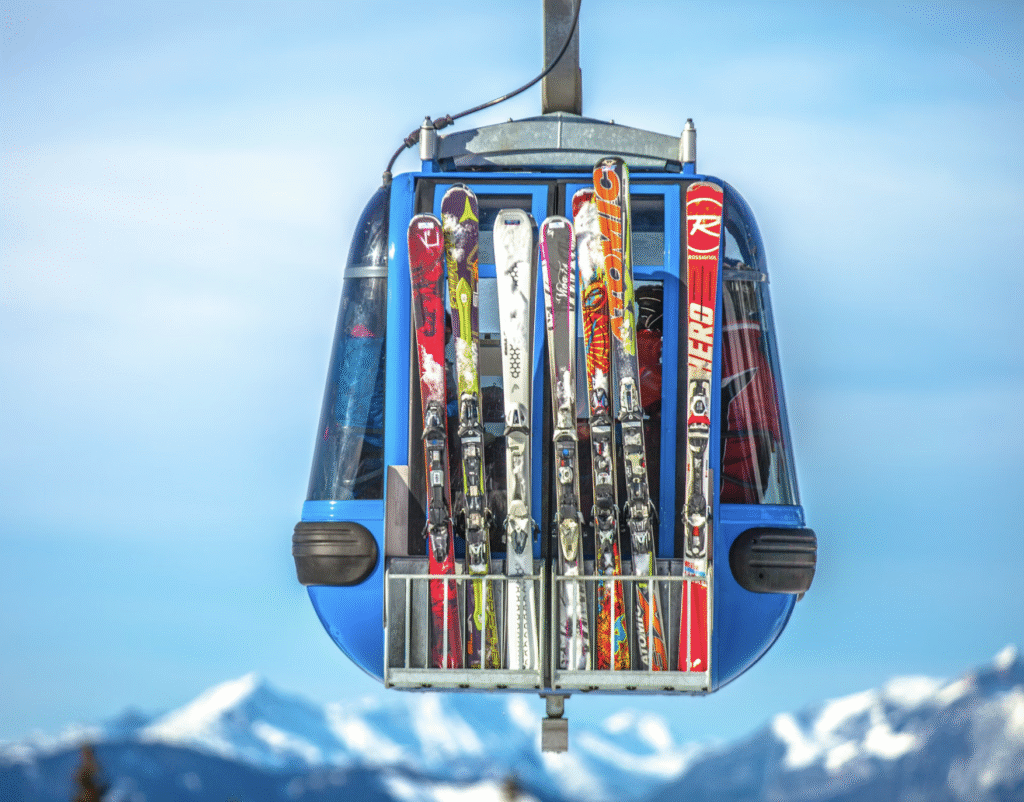
You probably noticed a theme. All carriers allow two bags to count as one — with some variation in language. This means, as long as you comply with the weight and dimension restrictions, you can get a lot of gear into two bags (ski and boot) and only have it count as one checked bag. For families with tons of gear, this can help limit the number of bags counted against you.
Tips to avoid bag fees
Now, how do you avoid the fees altogether? There are several ways:
- Pack smart: By maximizing gear bags as mentioned above, you can really take advantage of this “two for one” loophole.
- Pay in advance: Some airlines, such as Frontier and United, give a discount if you pay for your bags at booking or well in advance of flying.
- Elite status: Many airlines offer free checked bags as a benefit for passengers with elite status — even the lowest tier. For example, American Airlines
AAdvantage - Hold the right credit card: A litany of airline co-branded
credit cards Rewards Visa
$99Rates & Fees
- 2X points per $1 spent on Southwest® purchases
- 2 points for every $1 you spend at gas stations and grocery stores on the first $5,000 in combined purchases per anniversary year
- 1X point per $1 spent on all other purchases
$0 introductory annual fee for the first year, then $150
- 2X miles per dollar spent on purchases made directly with Delta
- 2X miles per dollar spent at U.S. supermarkets
- 2X miles per dollar at restaurants worldwide, plus takeout and delivery in the U.S.
- 1X miles on all other eligible purchases

$0 intro annual fee for the first year, then $150Rates & Fees
- Earn at least 9X total miles on eligible United flights (excluding Basic Economy and other base fares)*
- 3X miles on all other eligible United purchases
- 2X miles on dining and direct hotel stays
- 1X on all other purchases
- 6x miles on the primary cardmember’s fare from United as a MileagePlus member
- 3x miles on United purchases with the United℠ Explorer Card
- Additionally, several credit cards include airline incidental fee credits that can be redeemed for expensive bag fees for your trip. American Express Platinum Card® and
Hilton Honors
Bottom Line
With ski season upon us, flyers who typically carry on bags and aren't concerned about fees may be curious what that ski gear will cost to check their ski or snowboard equipment. Luckily, many airlines allow a ski bag and boot bag to count as one checked luggage. Plus, with the myriad of airlines statuses and co-branded credit cards, it's possible to avoid those fees altogether.
For rates and fees of the cards mentioned in this post, please visit the following links: Southwest Rapid Rewards® Plus Credit Card (Rates & Fees), and United℠ Explorer Card (Rates & Fees)