






AwardWallet receives compensation from advertising partners for links on the blog. The opinions expressed here are our own and have not been reviewed, provided, or approved by any bank advertiser. Here's our complete list of Advertisers.
Most people enter the points and miles world as a solo player. That person opens a card, earns a welcome bonus, and starts reaping the
That is where a “Player Two” comes in.
Below, we break down the Player Two concept and share practical ways to involve others in a points and miles strategy.
Player Two Defined
The term “Player Two” typically refers to someone who earns points and miles alongside you and shares your travel rewards and goals. This could be a friend, family member, or any adult with whom you earn and redeem points.
There's also no reason to stop at Player Two. If you're earning and using points for travel with more than two adults, those are your players three, four, five, and so on. In some households, that might include teenagers added as authorized users to help earn rewards while building credit. In others — such as ours — it could mean extended family members who travel together and coordinate card applications and referrals.
Related: How Teenagers Can Earn Points and Miles

How To Involve Your Player Two in Your Points and Miles Hobby
Staying organized and earning points and miles together
Getting organized is what turns a shared points and miles strategy from manageable into sustainable. Whether that means using a spreadsheet, a card-tracking tool, or a combination of both, the key is having a system you both understand and actually use.
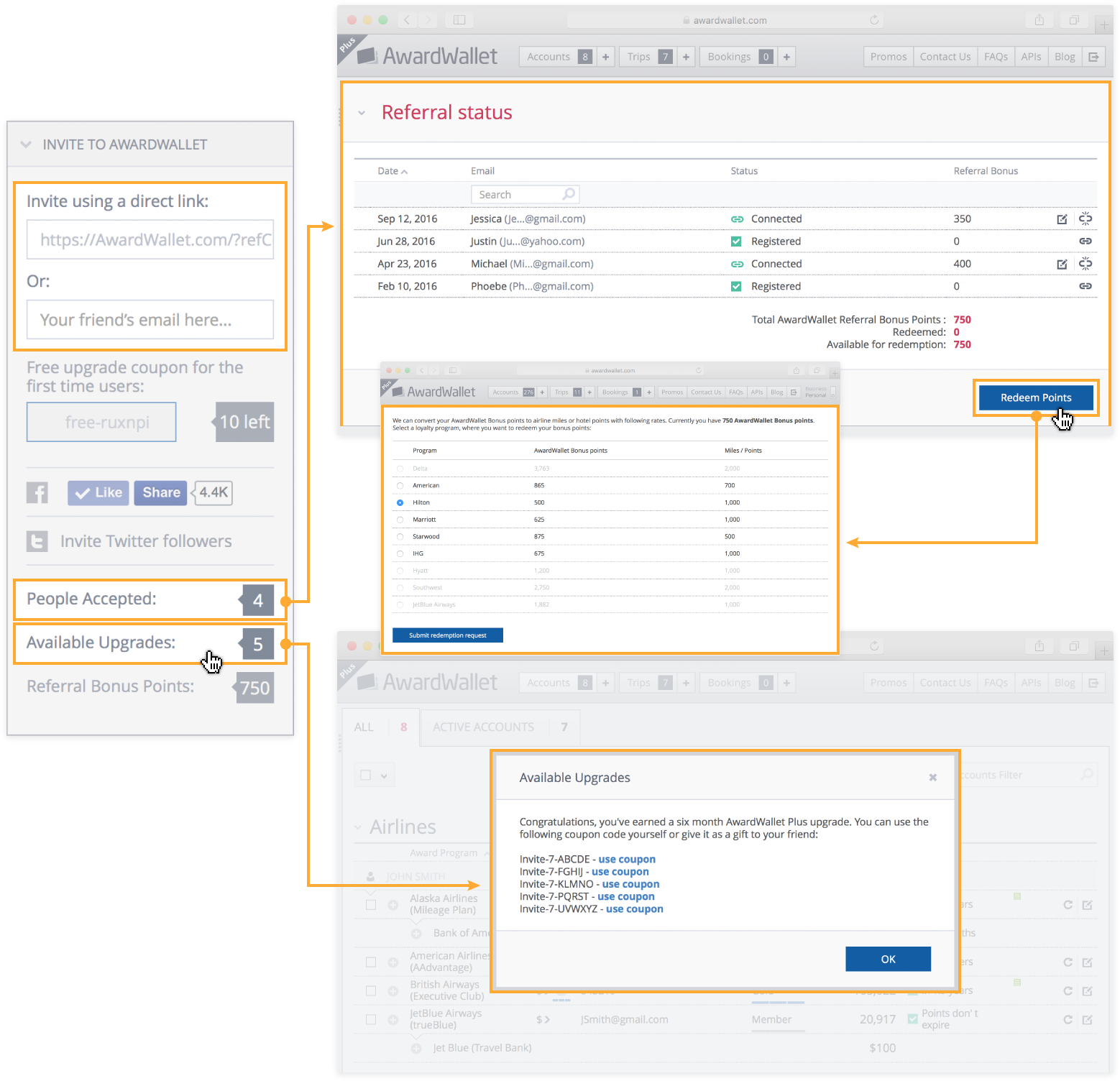
In our case, we rely on Travel Freely to track card applications and timelines, and AwardWallet to monitor points and miles balances, as well as other credit card perks.
The specific tool matters less than the habit. What matters is consistently tracking annual fees, benefits, and rewards across all your cards.
Don’t have an AwardWallet account yet?
This link is a special coupon just for blog readers. Sign up today, and get an extended, 6-month trial of AwardWallet Plus!
It's tempting to add each other as authorized users when you open a new card. While it makes it easier for both players to use the same card, it's generally not the best approach. For one thing, some cards charge a fee to add authorized users. Additionally, authorized user accounts can affect your Chase 5/24 status.
Instead, consider adding Player Two as an authorized user only when there’s a clear strategic reason. This can be the case if there's a specific carry-over benefit you're seeking (like Priority Pass airport lounge access).
That said, when a card is more than two years old, adding your Player Two as an authorized user will have less of an impact on their credit report as they apply for their own
Tip: Instead of relying on authorized user cards for sharing, simply put your card in your Player Two's digital wallet.

Working strategically with a Player Two
Working alongside a Player Two expands both your earning and redemption options, especially when bank rules or application limits come into play.
One of the most common constraints is Chase’s 5/24 rule. Chase will generally stop issuing credit cards to applicants who have opened five or more cards across all banks in the past 24 months, based on what appears on their credit report. If you’ve felt boxed in by that rule, having a Player Two can help keep your strategy moving. When an elevated welcome bonus appears and one person is no longer eligible, the other may still qualify and apply instead.
A Player Two also makes it easier to pace applications responsibly. Opening too many cards in a short period of time and having multiple credit inquiries can limit approvals, even if your credit score remains strong.
When two people are working together, you can alternate applications. That approach helps manage application timing and inquiries across two credit reports while still allowing the household to continue earning points and miles.
Related: Understanding Rewards Credit Card Application Rules and Restrictions
Earning extra bonuses by referring Player Two
When my husband joined me in points and miles, the benefits went beyond simply doubling our earning potential through his own cards and spending. It also opened the door to referral bonuses. By referring each other for new cards, we were able to earn additional points or miles on top of the welcome bonuses already available to the applicant.
Referral offers vary by card and bank and can change from time to time. You should always check the fine print for the card you're referring to. Here are a couple of popular referral programs:
One way to use referrals strategically is when earning the Southwest Airlines Companion Pass. An individual can open two credit cards and earn a Southwest Airlines Companion Pass. With multiple players, however, you can open three cards between the two of you, and, factoring in the referral bonuses, potentially earn two passes. That can be especially valuable if you're booking travel for more than two people.
In addition, we've doubled our referral capacity outside our household as well. We don't just refer each other to credit cards; we refer our friends and family. Banks put limits on how many referral bonuses one can earn annually, so having multiple players increases the number of people you can refer and earn bonuses from.
Sharing and pooling points with a Player Two
A significant benefit that comes with a Player Two is simple: access to more points and miles. Sometimes, you and your Player Two will want to combine points to book expensive redemptions, work toward status, utilize orphaned points, or preserve points or miles associated with a card you want to close.
Some programs charge fees to transfer points or restrict points pooling to those within the same household. Because these rules vary by bank and
Use the following resources as a general guide to pooling points in different programs:
- Which Rewards Programs Let You Pool Points and Miles for Free?
- How Families Can Work Together To Pool Points and Miles

Convincing someone to become your Player Two
Everyone enters points and miles from a different starting point. When my husband first became involved in our points and miles strategy, he was a little skeptical. His hesitation wasn’t about using credit cards in general, but about whether opening multiple cards would negatively affect his credit score.
Because of that, we started slowly. Opening a card or two and seeing how his credit responded helped build confidence. Over time, seeing balances paid in full and trips covered with points made the strategy feel sustainable. That gradual approach is what ultimately led him to become my solid Player Two.
Related: How To Create a Travel Rewards Credit Card Strategy for Families
Final Thoughts
As long as everyone is organized and responsible, adding a Player Two to your points and miles strategy can greatly improve your experience with award travel. Things may become slightly more complex, but you’ll likely more than double your earning potential — and benefit from having multiple perspectives working toward the same travel goals.