






AwardWallet receives compensation from advertising partners for links on the blog. The opinions expressed here are our own and have not been reviewed, provided, or approved by any bank advertiser. Here's our complete list of Advertisers.
How many miles do you need for a free flight? It depends. If you’re new to redeeming airline miles, buckle up. You'll soon learn that booking award tickets can be much more confusing than buying a ticket using cash. But don't let that scare you off.
Airlines use multiple criteria to price their award tickets. The key takeaway is that the cost in miles can be very different from the cash price of the same flight. If you don’t understand how award pricing works, it's easy to overspend your miles. You also might overpay in terms of taxes and fees.
In this post, we’ll cover all the factors that can impact your out-of-pocket costs and how many miles you need for a free flight.
Award Flight Pricing Basics
Airlines generally use one of three pricing models for award tickets:
- Region-based pricing
- Distance-based pricing
- Revenue-based pricing

Award Charts
Of course, award pricing isn't always that straightforward. Airlines may combine pricing methods or layer additional rules on top of them, which is where award charts—and understanding how to read them—come in.
Some airlines publish award charts that show how many miles you'll need for a flight, while others use dynamic pricing that adjusts award prices based on demand. Even airlines with award charts may vary pricing based on factors like travel dates, cabin class, or award availability.
We'll explain the three primary pricing models first, then look at the other factors that can affect the final cost of an award.
Region-Based Award Pricing
The most prevalent airline award pricing is a region-based award chart. Instead of charging based on the distance you fly, airlines divide the world into regions and assign a mileage price for travel between those regions.
For example,
The mileage requirements below are from American Airlines' award chart for flights operated directly by AA or its regional partners (like American Eagle).
American Airlines Award Chart
| Region: | Main Cabin starting at: | Premium Economy starting at: | Business / First starting at: |
|---|---|---|---|
| Contiguous 48 U.S. states + Canada | 7,500 | 15,000 | |
| Mexico + Caribbean + Central America | 10,000 | - | 20,000 |
| South America – Short Haul | 15,000 | - | 30,000 |
| Alaska + Hawaii | 20,000 | 40,000 | 60,000 |
| Europe | 25,000 | 50,000 | 75,000 |
| South America – Long Haul | 30,000 | 60,000 | 90,000 |
| Asia + Middle East + South Pacific | 35,000 | 60,000 | 95,000 |
However, this chart is a bit deceptive. Note that these are the “starting at” prices. American combines this chart with dynamic pricing.
American also publishes a separate region-based chart for partner flights.
American Partner Award Chart — From Lower 48 States and Canada
| To: | Main Cabin - Off Peak | Main Cabin | Premium Economy | Business / First | First |
|---|---|---|---|---|---|
| Contiguous 48 U.S. states & Canada | - | 12,500 | 22,500 | 25,000 | 50,000 |
| Alaska | - | 15,000 | 25,000 | 30,000 | 55,000 |
| Hawaii | - | 22,500 | 50,000 | 55,000 | 80,000 |
| Caribbean | - | 17,500 | - | 27,500 | 52,500 |
| Mexico | - | 17,500 | - | 27,500 | 52,500 |
| Central America | - | 17,500 | - | 27,500 | 52,500 |
| South America Region 1 | - | 20,000 | - | 30,000 | 55,000 |
| South America Region 2 | - | 30,000 | 40,000 | 57,500 | 85,000 |
| Europe | 22,500 | 30,000 | 40,000 | 57,500 | 85,000 |
| Middle East | - | 40,000 | 62,500 | 70,000 | 115,000 |
| Indian Subcontinent | - | 40,000 | 62,500 | 70,000 | 115,000 |
| Africa | - | 40,000 | 65,000 | 75,000 | 120,000 |
| Asia Region 1 | - | 35,000 | 50,000 | 60,000 | 80,000 |
| Asia Region 2 | - | 37,500 | 50,000 | 70,000 | 110,000 |
| South Pacific | - | 40,000 | 65,000 | 80,000 | 110,000 |
Like the first chart, these prices represent the lowest available award rates rather than guaranteed prices. Even so, the charts are still useful because they illustrate how region-based pricing works: the mileage cost is determined primarily by where you're traveling, not how far you fly.
American Airlines publishes its region definitions here, highlighting which countries are in which region.
Example of region-based award pricing
Let's pretend we want to fly from Los Angeles to London. After confirming that the U.K. is part of the Europe region, which should run around 22,500 miles, we can head to aa.com to look for a flight.
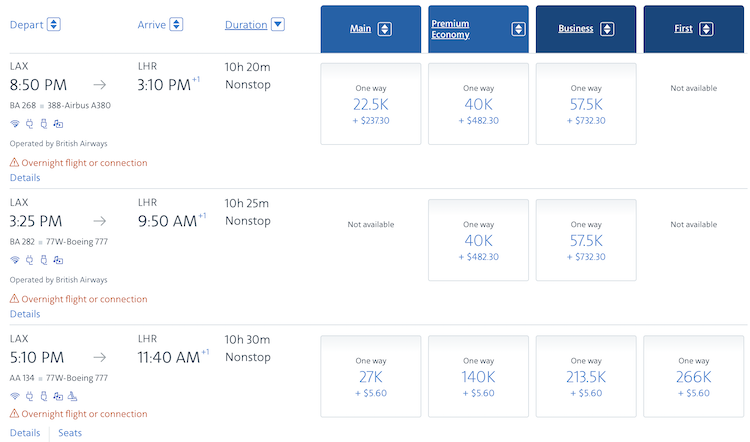
In this example, the British Airways nonstop flight prices at 22,500 miles, just like the award chart states, but carries substantial taxes and carrier surcharges. American's own nonstop flight avoids those fees but costs 27,000 miles because of dynamic pricing. Premium economy tells an even bigger story: 40,000 miles on British Airways versus 140,000 miles on American for the same route.
The main takeaway is that with region-based award charts, where you're flying determines the base price — not the exact distance of your flight. Whether you're departing from Los Angeles, Chicago, or Santa Fe, you're still traveling between the same two regions.
Advantages of region-based pricing
One of the biggest advantages of region-based pricing is that each program has its own set of prices with its own sweet spots. One type of airline miles might have the best pricing between the U.S. and England, but another might have lower pricing between the U.S. and South Africa. If you have multiple types of reward points, you'll have the flexibility to book at a lower cost.
Savvy travelers also can take advantage of differences in how frequent-flyer programs define their award-chart regions. For example, Flying Blue includes Northern Africa as part of Europe and charges less to fly there than many competitors. Differences like these can significantly reduce the number of miles required for certain trips.
Distance-Based Award Pricing
Another common way airlines price award tickets is by distance. In this model, the country or region you're visiting doesn't matter. Instead, the price of your award ticket is based on the flight's distance (in miles).
Some programs use the total distance you fly on your entire itinerary. Other programs calculate a price for each flight segment separately before adding them together. That can get expensive if your first flight goes west, from St. Louis to Denver, before your second flight flies east from Denver to Paris.
Examples of distance-based award pricing
Total distance example
Alaska Airlines Atmos
| Distance (miles) | Economy starting at: | First starting at: |
|---|---|---|
| Less than 700 miles | 4,500 | 15,000 |
| 701–1,400 miles | 7,500 | 25,000 |
| 1,401–2,100 miles | 10,000 | 25,000 |
| 2,101-3,500 miles | 12,500 | 30,000 |
| 3,501 miles or more | 20,000 | 60,000 |
The farther you fly, the more points you'll need. For example, itineraries of 1–700 miles require the fewest Atmos Rewards points, while trips of 3,501 miles or more fall into the highest pricing band.
Per-segment example
British Airways Club also uses distance-based pricing, but it prices each flight segment individually rather than the itinerary as a whole.
Suppose you're flying from Miami to San Francisco with a connection in Dallas:
- Miami (MIA) to Dallas (DFW): 1,121 miles
- Dallas (DFW) to San Francisco (SFO): 1,464 miles
Because each flight is priced separately, you'll pay the mileage required for the Miami to Dallas segment plus the mileage required for the Dallas to San Francisco segment.
Now compare that to a nonstop return flight from San Francisco to Miami. Since there's only one flight segment, you'll pay the mileage for that single segment rather than the combined cost of two separate flights.
Pro tip: Great Circle Mapper® is the perfect tool for checking flight distances. The only information you need is the IATA airport code for each stop on your itinerary.
Advantages of distance-based pricing
Distance-based pricing can offer excellent value on nonstop flights, particularly when the route falls just below the upper limit of a pricing band. However, programs that price each flight segment separately often become less attractive once connections are added. If your itinerary requires multiple stops, programs like Cathay Pacific that use the total distance are usually cheaper than pricing based on each flight segment.
Distance-based and region-based pricing are very different, but neither offers universally better pricing. Compare prices and then pick the program with the lowest mileage requirements for your trip. The origin, destination, route, and
Revenue-Based Award Pricing
With revenue-based pricing, the number of miles required is tied to the cash price of the flight. Generally speaking, more expensive tickets require more miles, while cheaper tickets require fewer. Although the exact redemption value can vary slightly between programs—and even between fares on the same airline—it typically stays within a fairly narrow range. Examples of revenue-based programs are Southwest
Advantages of revenue-based pricing
Revenue-based pricing rarely presents opportunities for maximizing your frequent-flyer miles. If a ticket is expensive to buy, it's also expensive when using miles. On the other hand, you won't spend nearly as much time checking flight distances or learning about award charts. If you value simplicity over maximizing the return on each mile spent, these programs might win you over.
Other Factors That Affect Award Pricing
Understanding the three primary pricing models is a great starting point, but they don't tell the whole story. Several other factors can influence how many miles you'll actually pay for an award ticket.
Dynamic award pricing
Dynamic pricing means the number of miles required for an award can change based on factors such as demand, cash fares, or other variables determined by the airline. Rather than charging a fixed mileage price, airlines adjust award costs over time, meaning the same flight may cost a different number of miles from one day to the next.
Some airlines use dynamic pricing alongside an award chart, publishing “starting at” prices while allowing awards to price higher—or occasionally lower—depending on demand. Others have eliminated award charts altogether and rely entirely on dynamic pricing.
Today, many major U.S. airlines use some form of dynamic pricing:
- Alaska Airlines: Uses an award chart alongside dynamic pricing.
- American Airlines: Publishes an award chart with estimated starting prices, but award pricing is ultimately dynamic.
- Delta Air Lines: Uses fully dynamic pricing.
- United Airlines: Uses fully dynamic pricing, although award floors can be found roughly based on region.
Peak vs. off-peak award prices
Some frequent-flyer programs also charge different award prices depending on your travel dates, using predetermined peak and off-peak calendars. Traveling during off-peak periods can significantly reduce the number of miles required for an award ticket.
British Airways, Iberia, Aer Lingus, and Virgin Atlantic all use some form of peak and off-peak pricing.
For some programs, you can find a calendar of dates showing specific peak and off-peak dates, though they can be hard to find.
When peak or off-peak dates affect award costs, both prices should be included in the award chart. If you can adjust your travel dates to fly on off-peak dates, it can lead to big savings.
Standard vs. Saver Awards
Even when an airline publishes an award chart, you won't always find seats available at the lowest mileage price. Airlines typically limit the number of seats available at those rates, a concept known as award availability or award space.
The lowest-priced awards are often called Saver awards. Many programs also offer Standard awards, which require more miles but are available on a wider selection of flights.
Unfortunately, airlines aren't always clear about which awards are Saver-level. United is a notable exception, making it easy to identify Saver award space when searching for flights.
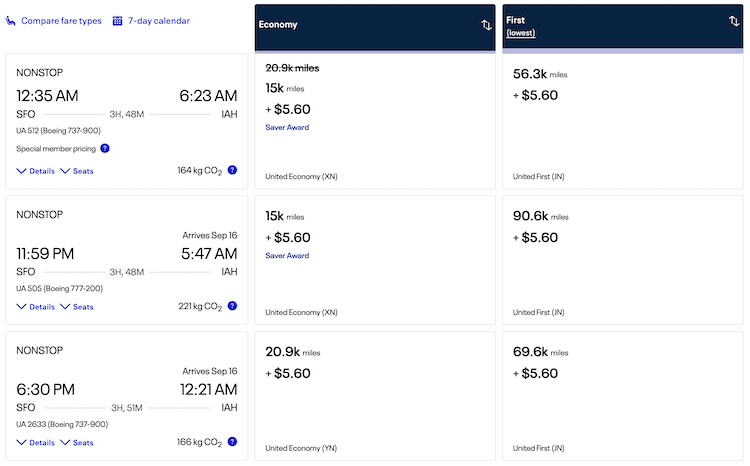
Remember that Saver availability is determined on a flight-by-flight basis. Availability can change by the hour, based on demand. If you don't find a Saver seat on your preferred flight, try searching different dates or routings, or check back later. If the airline allows free award changes, consider booking an acceptable itinerary now and switching to your preferred flight if Saver space opens up.
Class of service
Award prices generally increase with the cabin you book. Most programs let you redeem miles for economy, premium economy, business class, and first class, though the exact cabin options vary by airline.
If your itinerary includes multiple cabins, programs don't always price them the same way. Some charge based on the highest cabin on your itinerary, even if only one segment is in business or first class. Others prorate the cost based on the cabin flown on each individual flight. Understanding how your chosen loyalty program handles mixed-cabin itineraries can help you avoid paying more miles than necessary.
One point of confusion is domestic first class. While many U.S. airlines market their premium domestic cabins as “first class,” most frequent-flyer programs treat them as business class for award pricing. True first-class pricing typically applies only to flights with a separate international first-class cabin.
Related: How To Fly American Airlines' Best Business- (and First-) Class Seats Within the U.S.
Operating airline
The last factor affecting how many miles you need for an award ticket is the airline operating your flight. Some frequent-flyer programs charge different amounts depending on whether you're flying the airline's own aircraft or a partner airline.
For example, some programs publish separate award charts for partner airlines, while others charge different mileage rates for flights operated by partners versus their own flights. Before booking, it's worth comparing your options, as the same route may cost a different number of miles depending on the operating airline.
Related: Beginner's Guide to Airline Alliances and Partnerships
Out-Of-Pocket Costs
Award tickets aren’t completely free. When you redeem airline miles, you’ll still be responsible for paying taxes, fees, and carrier surcharges. You can minimize these out-of-pocket costs in several ways. You may have to choose between paying fewer miles or less cash, though. To help you find the optimal balance, let's examine the different factors that impact the amount you'll pay out of pocket.
Taxes and airport fees
Many countries and airports add mandatory taxes and fees to flights departing from, arriving at, or connecting through their airports. The U.K.'s Air Passenger Duty is a prime example of a country tax. The $5.60 September 11 Security Fee levied on all tickets departing a U.S. airport is an example of an administrative fee. Some airports add their own fees. In nearly all cases, these costs are passed directly to the traveler, charged whether you're paying cash or miles for your ticket.
While these fees do not change how many miles you need for a free flight, they do affect the total cost of a ticket. If you're comparing a cash fare with an award, make sure you subtract the fees to determine the value you're getting for the miles you're redeeming.
Fuel or carrier surcharges
Fuel surcharges (sometimes called carrier surcharges) are a made-up fee introduced by airlines about 15 years ago at a time when fuel costs were unusually high. They were created as a way to get more income and offset their operating costs. On award tickets, you'll usually pay these surcharges even after redeeming your miles.
Unlike taxes and airport fees, carrier surcharges vary depending on the airline, the frequent-flyer program you use, and sometimes even where your trip begins.
The operating airline matters
Let’s use an example of flying from New York-JFK to London Heathrow (LHR). British Airways is notorious for its high fuel surcharges, while American Airlines doesn't impose them on its own flights. If you fly from JFK to LHR on an American Airlines-operated flight, you won’t pay any fuel surcharges. If you fly with BA, you will. $5.60 versus $307.30 in fees is a big difference.
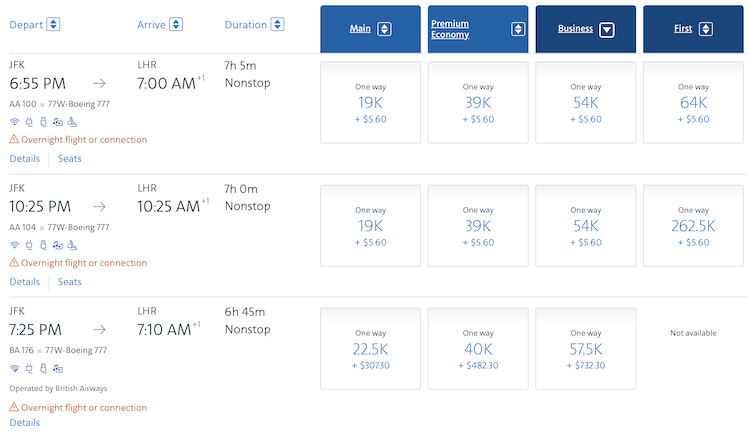
Choosing an airline that doesn't impose carrier surcharges is your first line of defense. But if you really want to fly British Airways, you still have another option.
The frequent-flyer program matters, too.
Even when the operating airline charges carrier surcharges, the loyalty program you use to book the ticket can make a big difference.
Turkish Airlines Miles&Smiles, for example, passes on carrier surcharges on award tickets. Booking a Turkish Airlines business-class flight from Atlanta to Istanbul costs 65,000 miles plus $217.80 in taxes and fees.
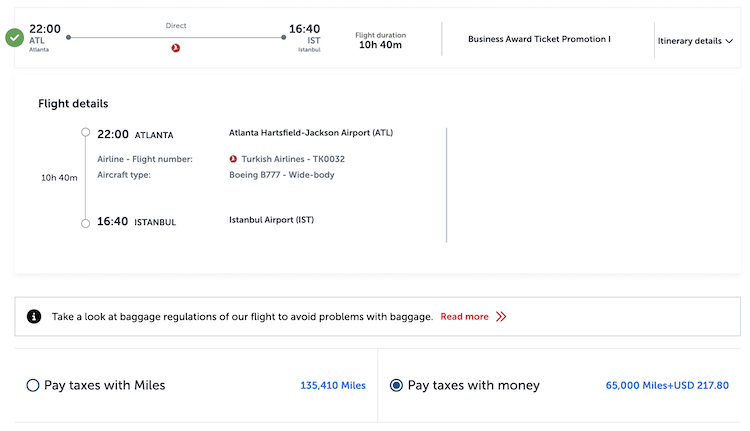
But if you book that same flight with
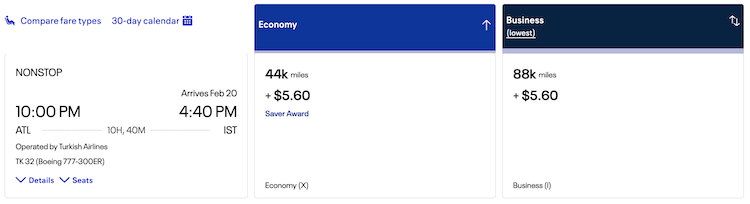
This illustrates one of the tradeoffs you'll often face when booking award travel: paying more cash to save miles, or spending more miles to reduce your out-of-pocket cost. In this example, saving 23,000 miles for an extra $210 would likely be the better value.
Some programs aren't nearly as forgiving. British Airways flights booked through Alaska Atmos Rewards, for example, can still carry eye-popping carrier surcharges.

Your departure country can matter, too.
Some countries restrict or prohibit fuel surcharges on flights departing their territories. Australia, New Zealand, Brazil, Hong Kong, the Philippines, and Vietnam all have restrictions on fuel surcharges.
Brazil has an outright ban on all fuel surcharges for flights departing its national territory. If you fly from Sao Paulo to London, you won't have to pay fuel surcharges. That's true even if your flight is operated by British Airways (notorious for its fuel surcharges) and you use miles that don't protect you. Fly the reverse route from London to Sao Paulo, however, and British Airways' carrier surcharges will once again apply.
Related: Tired of Huge Fees on Award Flights? Fly From These Countries That Limit Fuel Surcharges
Other award fees
Some frequent-flyer programs, like Avianca LifeMiles and Frontier Airlines, charge fees to book award tickets. Alaska Airlines Atmos Rewards has a booking fee too ($20), but only when your travel includes a partner airline.
Other fees include booking awards by phone or confirming your flights within a few weeks of departure (known as a “close-in” fee, typically applied to confirming a ticket within two weeks of the departure date). These additional costs vary between programs. Be sure to check before you decide on a booking strategy.
What if I Can't Find the Award Chart?
Award pricing is much less transparent now than it used to be. Nowadays, many frequent-flyer programs don't publish award charts at all.
If you can't find an award chart, don't worry. Search directly on the airline's website, compare prices across multiple dates, and check other
So How Many Miles Do You Need for a Free Flight?
There's no single answer to how many miles you'll need for a free flight. The cost depends on the airline, the loyalty program, the route, the cabin, and sometimes even the date you travel.
While award pricing has become more complex over the years, that complexity also creates opportunities. Understanding how airlines price awards—and comparing multiple loyalty programs before booking—can often save you thousands of miles.
If you want the most flexibility, consider earning transferable points, such as
Page Contents
- Award Flight Pricing Basics
- Award Charts
- Region-Based Award Pricing
- American Airlines Award Chart
- American Partner Award Chart — From Lower 48 States and Canada
- Distance-Based Award Pricing
- Revenue-Based Award Pricing
- Other Factors That Affect Award Pricing
- Out-Of-Pocket Costs
- What if I Can't Find the Award Chart?
- So How Many Miles Do You Need for a Free Flight?