



AwardWallet receives compensation from advertising partners for links on the blog. The opinions expressed here are our own and have not been reviewed, provided, or approved by any bank advertiser. Here's our complete list of Advertisers.

There's a common misconception that lenders and credit providers will frown upon frequent applications and that applying for more credit cards will negatively affect your credit score. Luckily for award travelers, that isn't necessarily the case.

It's true — your credit score does take a temporary dip when you apply for new cards, particularly if you apply for more than one in a short period. Even so, provided you do other things to maintain healthy credit, like paying your credit card accounts on time and in full every month, adding more credit cards to your wallet can actually increase your credit score over time. Here's how.

How Are Credit Scores Calculated?

When we talk about a credit score, we are normally referring to your FICO® Score. Credit bureaus calculate your FICO Score using the following criteria:

  • Payment history (35%): Late payments represent a much higher credit risk for lenders.
  • Amounts owed (30%): Also referred to as credit utilization rates or available credit versus how much is in use.
  • Length of credit history (15%): Average age of revolving debt accounts.
  • New credit (10%): Hard pulls (credit inquiries from applications) and new accounts show here.
  • Credit mix (10%): Ensure you have a diverse mix of credit, such as car loans, mortgages, guarantor accounts, and credit cards.
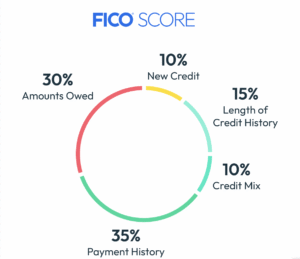
White background with black text and a rainbow circle showing percentages for calculating a FICO score
Credit: MyFICO.com

Another popular credit scoring tool is VantageScore, which puts different weights on similar categories:

  • Payment history (40%)
  • Depth of credit (21%)
  • Credit utilization (20%)
  • Balances (11%)
  • Recent credit (5%)
  • Available credit (3%)

As you can see, the categories are labeled differently, but they mean essentially the same thing. VantageScore places greater emphasis on payment history and the age of your credit accounts, while FICO gives more weight to your amounts owed, which is heavily influenced by your credit utilization ratio. VantageScore also separately considers your total balances and available credit, whereas FICO incorporates those factors into broader scoring categories.

Essentially, lenders want to see that you have a diversified credit portfolio over a sustained period, and that you're paying your bills on time and keeping your utilization rates low. If you tick all these boxes, credit providers are often more than happy to offer you new cards and financial products — or even increase your credit limit on existing cards — as you represent a “safe bet.”

a woman holds a credit card while reading information about it on her smart phone
Credit: Karolina Grabowska/Pexels

We recommend keeping a close eye on your credit score. The vast majority of credit cards offer cardholders ways to check credit scores for free to monitor changes over time. Capital One offers CreditWise, American Express provides MyCredit Guide, Chase includes Credit Journey, and the list goes on and on. The name might change, but the function is the same. Cardholders get a quick and easy way to check their scores directly in their card accounts.

For a more detailed report, you can get a free copy of your credit report every week. There are also third-party services, like Credit Karma, that can help ensure cards and payments are updated correctly on your credit report. If anything unexpected comes up that is cause for concern, you can address it immediately.

Related: A Beginner’s Guide to Credit Scores — And How Credit Cards Impact Your Score

Why Do Credit Scores Dip When You Get a New Credit Card?

When you apply for a new credit card, the issuer performs a credit check, also known as a hard inquiry or hard pull. A hard pull gives the potential lender access to your credit report, which can help them decide whether to approve you for the card, how much credit you'll be extended, and the card's interest rate. These inquiries cause a small, temporary drop in your credit score.

Expect an immediate drop of two to five points per inquiry. However, this could be higher if you have limited credit or are applying for your first credit card.

Too many inquiries in a short time frame can cause a more pronounced dip in your credit score, so we recommend spacing out applications every six months or so. The dip in your credit score starts to fade within weeks of the application.

Typically, you'll see the impact from that inquiry fade within six months; at the 12-month interval, that hard inquiry likely has no impact on your credit score (depending on the exact scoring model and version used).

Related: Understanding Rewards Credit Card Application Rules and Restrictions

How Adding a Credit Card Improves Your Credit Score

Opening a credit card account can improve your credit score by lowering your credit utilization, diversifying your credit portfolio, and demonstrating your ability to manage revolving credit responsibly. These are all factors that play key roles in calculating your credit score.

Extend the length of your credit history

One key factor credit agencies look at when calculating your credit score is how long accounts have been open. Having just one or two new accounts open may count against your score initially. But over time, it adds to the overall length of your credit history, gradually increasing your credit score.

One of the reasons we recommend downgrading credit cards rather than canceling them outright is that long-standing credit lines can help improve your credit score. Opening a card now won't help in this area, but keeping it open for years to come will.

2 people looking at smart phone to read credit card information
Credit: Bank of America

Reduce your credit utilization rate

Credit utilization plays a huge role in determining your credit score. Around a third of your credit score is calculated by your use of existing lines of credit, with lower utilization rates looked upon more favorably than high ones. So, how do more credit cards help lower your credit card utilization rate?

The more credit cards you have, the higher your total available credit. If you have a lot of available credit but your spending stays the same, your utilization rate will be low. Here's a simple example of how that could work:

  • If you have one credit card with a $10,000 limit and you spend $3,000 per month, your utilization rate is 30% ($3,000/$10,000).
  • If you get a second credit card with a $10,000 limit and still spend $3,000 per month, your utilization is now 15% ($3,000/$20,000).
  • If you have five credit cards with $10,000 limits and still spend $3,000 per month, your utilization rate is now 6% ($3,000/$50,000).
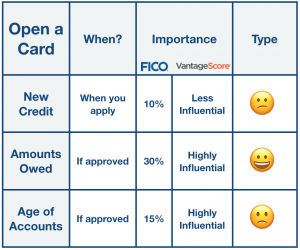
emojis show which factors are affected in your credit score by applying for a new credit card
AwardWallet infographic

Related: How To Manage Your Credit Score To Unlock the Best Travel Rewards

Bottom Line

So, does adding a credit card improve your credit score? Yes — as long as it's used responsibly and paid off in full each month. Rewards-earning credit cards can not only help push your credit score higher but can also provide access to amazing travel experiences for pennies on the dollar. And, higher credit scores mean you can be approved for more premium cards.

Tip of The Day
Did you know that you are able to expand the AwardWallet window or zoom out to see the Last Updated column? Easily see the last time AwardWallet checked your balance.
Image showing how expanding your browser window will display additional elements in the AwardWallet account dashboard

The comments on this page are not provided, reviewed, or otherwise approved by the bank advertiser. It is not the bank advertiser's responsibility to ensure all posts and/or questions are answered.

39

Your email address will not be published. Required fields are marked *

Comments

  • charles j says:

    I read something recently that the credit bureaus were changing the way (mix and percentage of factors) they use to determine Vantagescores, but not FICO scores.

  • miskocina says:

    It’s also a culture thing. In Europe (particularly Eastern Europe) credit cards are relatively unpopular.

  • Ryan says:

    Great breakdown of credit scores and how having more credit cards can improve your credit score. Thanks for the helpful information.

  • Kyler says:

    Based on my (limited) experience, recent credit card applications don’t hurt mortgage chances as much as many sites lead you to believe. Obviously, take that with a grain of salt, it being one data point and it wasn’t like I took on hundreds of thousands of available credit.

    • Kyler, you’re spot on. Any mortgage issuer will want to know about recent card applications but as long as you have a reasonable explanation for anything in the past 2 years that is new they’re typically fine with it. The bigger issue is any impact to your FICO score, which could decrease your chance of the best possible interest rate. Again, everything varies on a case by case basis, but your logic is sound.

  • Bill from Maine says:

    The more cards I get, the better my credit score becomes. I used to carry a score in the 775 range with the big 3 credit bureaus but when I paid my mortgage off a few years ago, my scores, including Fico, have been in the 800-825 range. I also think that paying cards off completely each and every month and not carrying a balance has a lot to do with my current scores.

  • marc says:

    My score dipped 66 points for about two weeks when I bought a new car. The dealer had 5 different banks pull my credit in addition to the dealer pulling it. It is now back to 825 where it should be.

  • Caroline says:

    This is so true! I used to only have one credit card for everything. I could not understand why my credit would not increase. I began to apply for everything and soon later, because of my debt to credit ratio, my scores shot up.

  • Lou says:

    good advice – though opening new ones can reduce average credit length quickly

  • Sebastian says:

    This is an interesting fact, as in Germany it is the way around – like totally opposite to that Idea – the more CC’s you’re holding, the worse your CreditScore is turning.

    So back here one has to decide carefully, which Card to apply for.

  • Chase says:

    FICO tells me that a hard pull stays on your record for 2 years, not 6 to 12 months as in the article.
    Also, it should be pointed out that individuals are penalized if they do not have varied credit (installment loans, etc.). For one who does not have any debt at all, I can see that this is considered a negative (rather than a positive).
    Finally, I have been an American Express Card holder for over 40 years, but I have changed Amex cards over the years in response to various underlying benefits, or upgrading from a Gold to a Platinum Card. Amex seems not to include the ‘total’ history when they do their reporting. Very annoying.

    • Chase, a hard pull absolutely stays on your credit report for 2 years. That said, the impact of that hard pull on your credit score drops over time. After 6 months most of the impact is gone and after a year, with FICO scoring models, you’ll find that there is no impact on your score with that hard pull. Yes, it’ll remain on your report, but its impact on your score is gone.

  • Jonmch says:

    lots of details here but if you are willing to work through it all it will pay off

  • Adam says:

    Another great article insight into travel related topics. I didn’t know about the small dip in your credit rating when you apply for a new card but good to see it recovers quickly.

  • Jacqueline parsons says:

    Thanks for the detailed insight into the workings of credit scores. I was myself trying to give six months gap between each new application at Amex.

  • Nicole says:

    Thanks for the information. We use several credit cards and my biggest fear was that my credit score would dip. So glad to know this is not the caee. Will use the info here to increase card use.

  • Air Flyer says:

    Yeah, but most of the times people open new lines of credit when they need the money and since opening new lines of credit reduces your score temporarily, it has more adverse effect than positive.

  • Mark L says:

    I find that owning a house also helps. I know this sounds silly, but after a few years of appreciation in your primary residence, those higher credit limits offers come quick and fast.

  • Ed says:

    I usually open only one new credit card a year and I pay my credit cards off each month so I have a good FICO score.

  • Andy says:

    Thanks, always good to see a reminder about all of this…

  • Maryjane says:

    i had excellent credit before starting to play the points and miles game and my score has only increased (with temporary dips as described in the article) since that time. The key is always paying off your balance each month.

    • RD says:

      Yeah the credit card companies want you to spend on their cards and pay them fees and interest as necessary as long as you pay on time. Paying off all balances at the statement is always the best idea though

  • Michael says:

    Very interesting and thorough explanation of the full scenario of how new and varied credit applications affect overall credit. Thank you.

  • Jakc says:

    i told this to my friends many times but they dont believe me lol

  • Kathie says:

    I used to hate leaving the cards I don’t use open, I can see over time it has helped my score though. Old habits are hard to break!

  • Vasi says:

    I have had so many credit cards that have only helped me increase my credit in the long run due to the higher spending limit between all the cards. My credit utilization ratio because of them is really good and in the long run my credit gets always higher.

  • Tim says:

    It’s a very temporary dip if you have a decent history.

  • Denise says:

    What is the typjcal minimum credit score for Travel reward cards? After a job loss we are climbing back out of a big hole. Credit score is 657 through Experian on credit tracker. In June I co-signed for a car for my daughter. Credit score was 675 then fell about 45 points for a couple of months then went to 657.

  • Mitch says:

    This is true in my experience I’ve had quite a bit of credit cards but with each application spread over time it really hasn’t had any negative impact on my credit score.

  • JonKarol says:

    Great overview. I still want to cancel a couple of cards I no longer want though (even though I know I’m better off keeping them open)!

  • Jamie says:

    This might be the thing that most people I talked to are surprised to learn. Less utilization (more credit) is so beneficial in the long run. Obviously money management matters most though.

  • Rob Arias says:

    I was freaked out when my score dipped heavily after opening a few accounts this year but now my score is about as high if not higher than when I started. Definitely useful if you have no immediate (~6 months) use for credit

  • angelo fonseca says:

    I never knew how each customer’s score was calculated. It is good to know such information.

  • charles j says:

    Thanks for the info and breakdown. I don’t more than a few points temporary possible affect on my credit score if I get multiple new credit cards around the same time.