





AwardWallet receives compensation from advertising partners for links on the blog. The opinions expressed here are our own and have not been reviewed, provided, or approved by any bank advertiser. Here's our complete list of Advertisers.
It's not uncommon to hear the terms “first class” and “business class” used interchangeably. Even some airlines are known to do this. For example, most domestic “first-class” seats are labeled “business class” when flying to Mexico, the Caribbean, and Canada. These aren't actually different products — the same seat may simply be marketed as first class on a domestic flight and business class on an international one.
However, for long-haul international travel, many aircraft are equipped with three (or more) cabins, including both business and first class. With all the investments airlines have made in their premium cabin products, the difference between business-class and first-class seats themselves can be relatively minor. So what separates first class from business class, and when should you consider splurging on first-class travel?
First Class vs. Business Class: Quick Comparison
To start, let's look at the differences between domestic first class, international business class, and international first class.
| Feature | Domestic First Class | Business Class | International First Class |
|---|---|---|---|
| Seat | A "larger than normal" recliner, typically not lie-flat | Typically lie-flat seats, sometimes with a door for privacy | Lie-flat seats, or even a true suite |
| Cabin Size | Forward cabin, with a curtain or bulkhead separating from economy | Larger premium cabin with more passengers | Smaller, quieter, and more exclusive cabin |
| Service | More attentive than economy | Premium service, if a bit standardized | Bespoke and attentive service |
| Food and Drinks | Complimentary drinks; meals on longer flights | Multi-course meals, better alcohol, and sometimes a separate bar | Better plating, selection, and more courses |
| Lounge Access | Typically not included | Typically included on long-haul international flights | First class lounges and ground service (when available) |
| Availability | On most domestic flights | Common on long-haul routes | More limited availability |
| Award Value | Typically a modest upgrade over economy | Often the sweet spot for comfort and value | Can be incredible, if you can find it |
What Counts as “First Class” Depends on the Route
There is a stark difference between domestic first class and international first class. First class when flying within the U.S. typically means a larger recliner in the front cabin of the airplane.

Confusingly, that same seat may be called business class when the aircraft operates an international route. For example, a plane flying domestically one day could operate between Miami and Punta Cana, Dominican Republic, the next. The seat hasn't changed, but the airline may market the premium cabin as business class rather than first class.
True international first class is something else entirely. On airlines that offer it, first class typically sits above business class and offers a significantly more elevated experience, often with more space, privacy, personalized service, and premium dining. It's for that reason that award travelers covet redemptions in “true” international first class.
Related: Business-class
The 5 Biggest Differences Between Business Class and First Class
Let's go over the differences between international business and international first class.
1. Seats and personal space
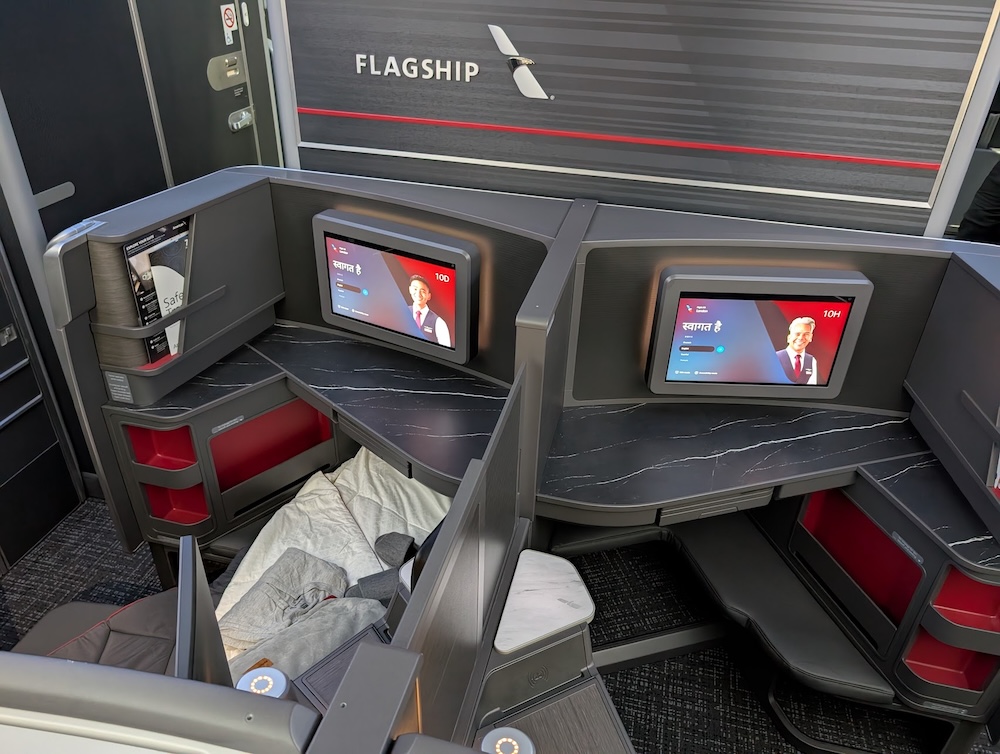
A big difference between business class and first class is the cabin layout and seats. In business class, the seats are typically lie-flat (though not always) and usually have direct aisle access.
Only a few business-class products still have a middle seat — such as a small subfleet of United and British Airways aircraft. These are generally a huge letdown and worth avoiding.
Privacy can vary significantly, too. Newer business-class products include a door, though they don't necessarily create a fully private space. Other travelers walking down the aisle can usually peer into your space. While more private than economy, it pales in comparison to select first-class suites, like Emirates' “Game Changer” first class. In first class, it's not uncommon to have a suite that feels truly private.
2. Cabin size
Some business-class cabins can feel quite spacious, with dozens of seats. First-class cabins, on the other hand, are typically much smaller, creating a quieter and more exclusive atmosphere.
Emirates is a great example, as some of its A380 can have up to 76 business-class seats! Even its first-class cabin is atypically large, with 14 seats. On board Emirates' first class, I lucked out with just one other passenger. If full, it could still feel busier than the competition.
Cathay Pacific's first-class cabins, for example, have just six seats, making the experience feel much more personal.
3. Food and drinks
Both business and first class will typically include food and beverages for passengers, but the quality and level of service can differ considerably between the two. An exception is budget airlines like ZIPAIR, which don't include any meal service with your ticket. It's just the seat.
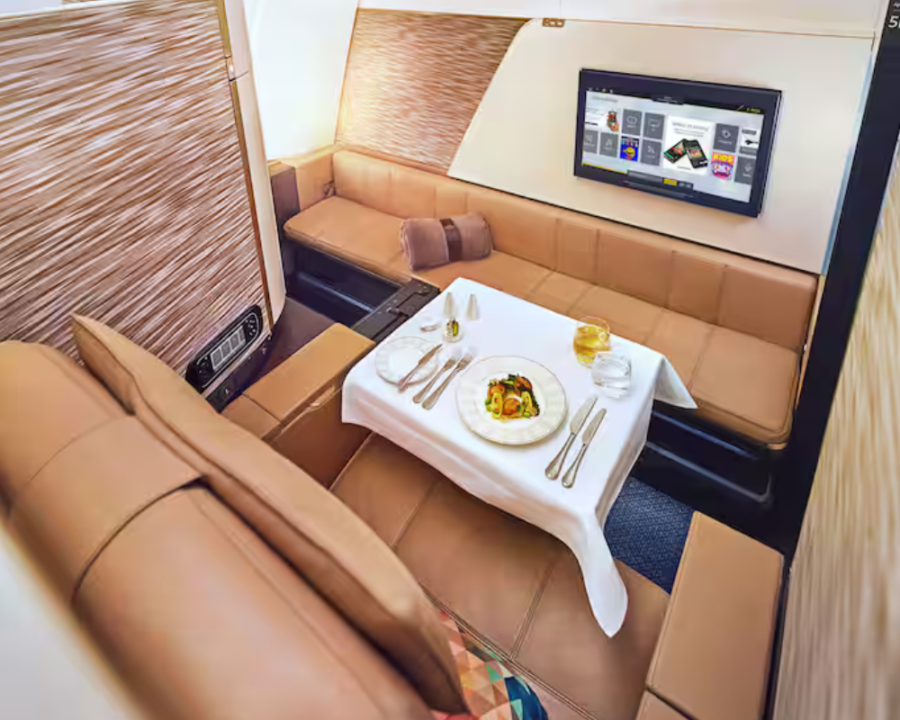
In business class, expect a three-course meal on most long-haul flights, along with complimentary alcoholic beverages. Depending on the route, there may also be an arrival meal or second meal service.
In first class, both the food and drinks typically get an upgrade. Alcohol is often premium (like Hennessy Paradis in Emirates first class), as is the wine list. Emirates is one of the biggest buyers of wine futures in the world, for example. For meals, you'll enjoy a fine-dining experience. Sometimes, caviar is included to make the experience feel even more premium. What is served depends on the airline, but expect the overall dining experience to be a step above business class.
4. Service
Service can vary widely between airlines and even between business-class cabins. In a large cabin like Emirates', mealtime can feel more like an assembly line. Others, like EVA Air, can offer service that feels closer to first class.
In first class, expect more personalized, attentive service. With fewer passengers to look after, the crew can typically provide more individualized attention. Emirates' A380 even has a dedicated shower spa attendant who prepares and cleans the onboard shower suites between passengers.
5. Lounges and ground experience
Another big difference between business class and first class is the ground experience. In business class, you'll typically receive access to the business-class lounge before your flight. If you're lucky, you can board directly from the lounge, as I did in Boston with British Airways. More typically, you'll have to find your own way to the gate.
In first class, the ground experience can be much more elevated. You may have access to a dedicated first-class lounge or a special section reserved for first-class passengers within a larger lounge. Some airlines take things even further, offering private transfers in a premium vehicle directly to the plane. Air France's La Premiere is perhaps the best-known example, with a highly personalized ground experience in Paris that includes a private lounge, dedicated assistance through airport formalities, and a chauffeured ride to the aircraft.
Related: Qatar Airways Al Safwa First Class Lounge: What Makes It Special and How To Access It for Less
When Business Class Is Enough
Unless you're a Kardashian, first class may not always be necessary for your flight. Maybe it's a short overnight flight to Europe from the East Coast, with only around six hours in the air. In this instance, first class may be a “waste” of miles, since you won't have very much time to enjoy the experience.
In other cases, business class may not be much “worse” than first class. If you're flying American's three-class product (while it still exists), the difference between first class and business class in the air is marginal. While you'll have access to a nicer lounge on the ground and a few additional perks, that may not be worth the extra miles to you.
When First Class May Be Worth It
International first class may be worth it for that bucket-list trip. For my honeymoon, for example, my wife and I flew Cathay Pacific and JAL First Class on our long-haul flights to Asia. It was an incredible experience we won't ever forget.
The product can play a big part in the decision to fly first class. Emirates' A380 first class features an onboard shower, a bucket-list experience for many. Even its “Game Changer” first-class suites, which aren't on aircraft with a shower, can be a worthy splurge.

Of course, whether first class makes sense also depends on the price and whether you can actually book it. Before splurging, consider how many additional points or miles you'll need compared with business class and whether the first-class experience justifies that premium.
How To Book Business Class or First Class With Points and Miles
With the explosion of points and miles in the mainstream, it's unfortunately become harder and harder to fly business or first class with points and miles. However, with a little persistence and flexibility, it's still possible.
I recommend signing up for a service like Seats.Aero for your ideal trip. You can filter by the points and miles currency that you're looking to use, as well as search across a broad number of dates to speed up your search. You can even “chat” with the service's AI assistant to help find award availability.
Timing can also make a big difference. For some programs, close-in booking will be your best friend, as airlines may release unsold business- and first-class seats as awards closer to departure.
Other programs have limited access to their best awards. Emirates, for example, currently restricts first-class award bookings to eligible Skywards elite members. In the past, availability was much more plentiful and accessible.
Finally, if the cash price of your ideal business or first-class flight is reasonable, you might consider booking through a travel portal that accepts your preferred currency. Chase Travel, for example, offers “Points Boost” redemptions that may be less expensive using points than the airline's own program. Since these are generally treated as paid tickets, you'll typically earn points or miles and receive applicable elite benefits as you would on an eligible cash fare.
Bottom Line
For the few airlines that still offer an international first class, splurging over business class can be a great use of your miles — provided the difference in award rates isn't too substantial. And if you do book first class, make sure you take advantage of all the perks that come with it.
After all, there's no guarantee the same award availability — or even the same first-class cabin — will be around for your next trip. Earn those miles, then burn them for the best experience you can get.
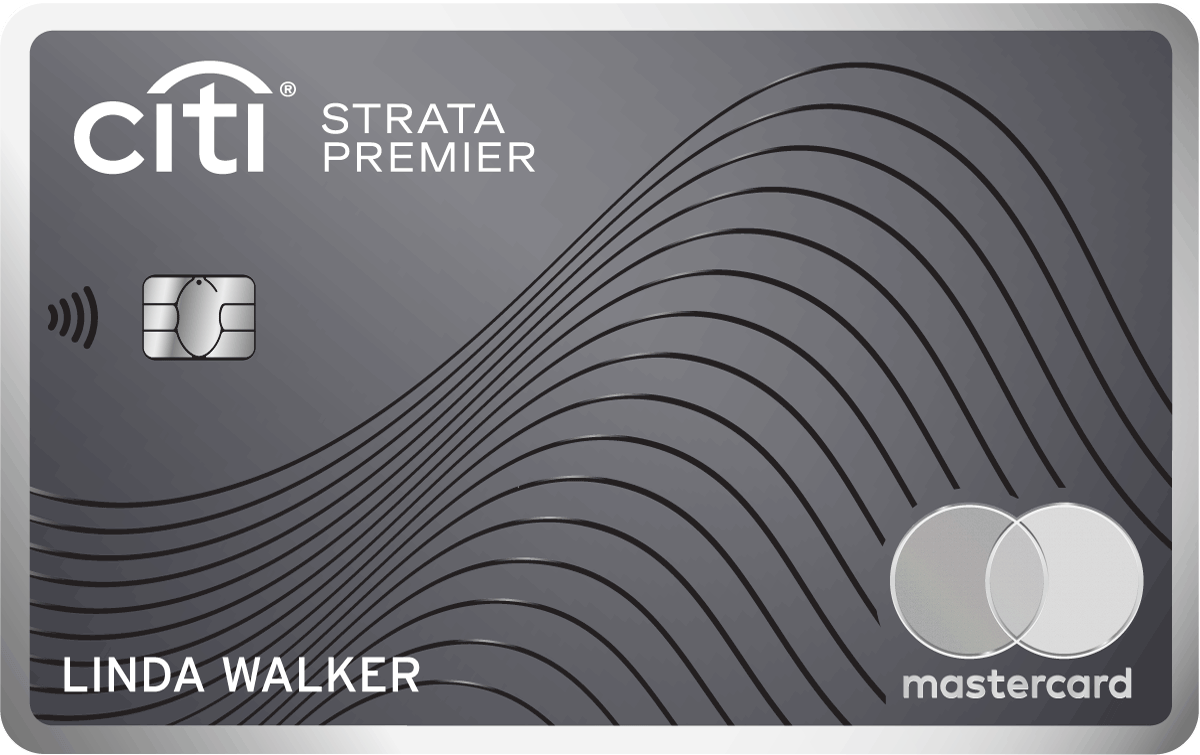
- Earn 60,000 bonus ThankYou® Points after spending $4,000 in the first 3 months of account opening, redeemable for $600 in gift cards or travel rewards at thankyou.com.
- Earn 10 Points per $1 spent on Hotels, Car Rentals, and Attractions booked on CitiTravel.com.
- Earn 3 Points per $1 on Air Travel and Other Hotel Purchases, at Restaurants, Supermarkets, Gas and EV Charging Stations.
- Earn 1 Point per $1 spent on all other purchases
- $100 Annual Hotel Benefit: Once per calendar year, enjoy $100 off a single hotel stay of $500 or more (excluding taxes and fees) when booked through CitiTravel.com. Benefit applied instantly at time of booking.
- No expiration and no limit to the amount of points you can earn with this card
- No Foreign Transaction Fees on purchases
- 10X on Hotels, Car Rentals, and Attractions booked through CitiTravel.com
- 3X – Earn 3 Points per $1 spent on Air Travel and Other Hotel Purchases
- 3X – Earn 3 Points per $1 spent on Restaurants
- 3X – Earn 3 Points per $1 spent on Supermarkets
- 3X – Earn 3 Points per $1 spent on Gas and EV Charging Stations
- 1X – Earn 1 Point per $1 spent on All Other Purchases
Page Contents
For rates and fees of the cards mentioned in this post, please visit the following links: Citi Strata Premier® Card (Rates & Fees)