





AwardWallet receives compensation from advertising partners for links on the blog. The opinions expressed here are our own and have not been reviewed, provided, or approved by any bank advertiser. Here's our complete list of Advertisers.
Ever since United's MileagePlus moved to dynamic pricing, award costs have been all over the map. Sometimes, you can find great deals. However, I often see 15,000 miles as the minimum price. And it's just upwards from there.
Enter LifeMiles. It’s my go-to currency for booking short United flights, and I can often save miles compared to booking through MileagePlus.
LifeMiles is not always the answer, but it has been a common enough solution that I want to highlight the usefulness of keeping a stash of LifeMiles on hand. Among non-U.S.
The program does have its quirks that you'll want to be aware. But savings for certain United itineraries are often worth the trouble.
Page Contents
LifeMiles Basics
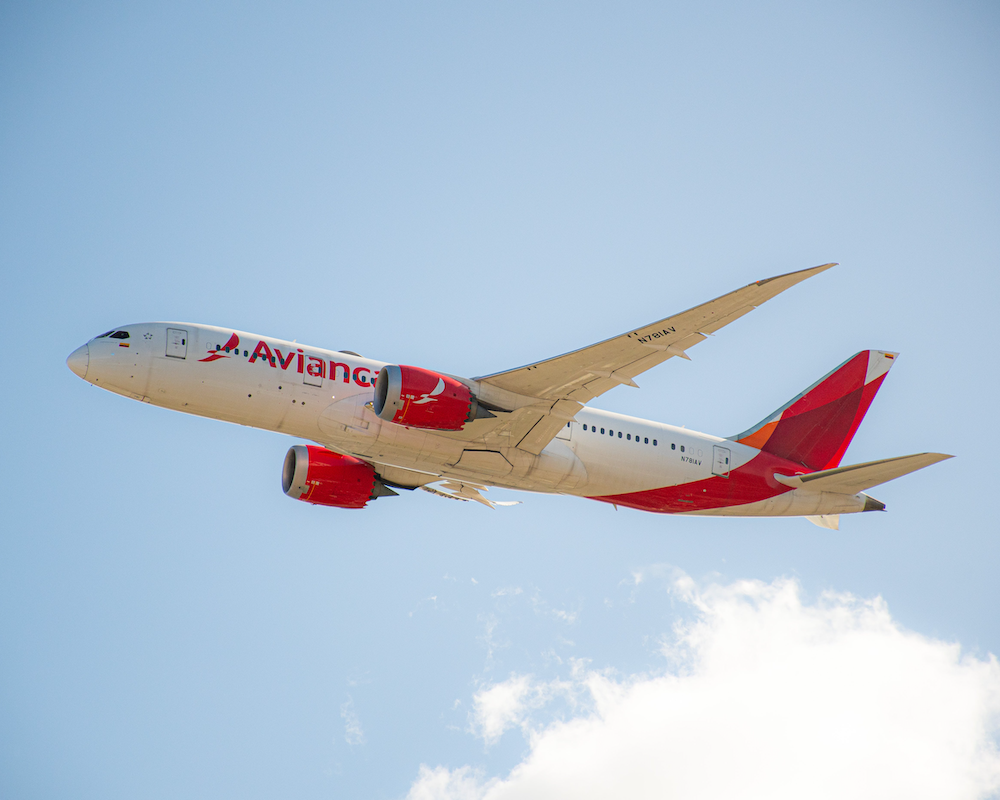
LifeMiles is the award program of Avianca, a Colombia-based airline with a strong presence across Central and South America. As a Star Alliance member, you can credit partner flights to LifeMiles.
You can also earn LifeMiles via transfer from multiple programs, including:
That means you can effectively earn LifeMiles through the following cards that earn transferable points:

$95
- 5X miles per dollar on purchases through Capital One Entertainment
- 5X miles per dollar on hotels, vacation rentals and rental cars booked through Capital One Travel
- 2X miles per dollar on all other purchases
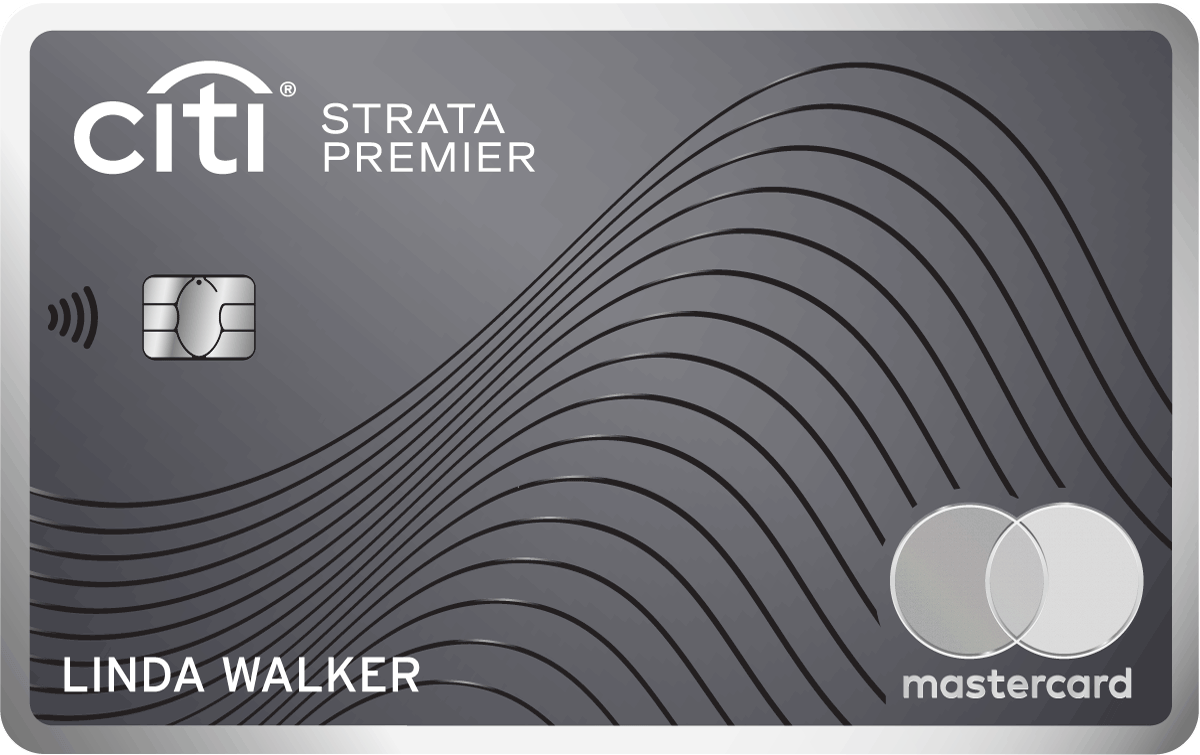
$95Rates & Fees
- 10X on Hotels, Car Rentals, and Attractions booked through CitiTravel.com
- 3X – Earn 3 Points per $1 spent on Air Travel and Other Hotel Purchases
- 3X – Earn 3 Points per $1 spent on Restaurants
- 3X – Earn 3 Points per $1 spent on Supermarkets
- 3X – Earn 3 Points per $1 spent on Gas and EV Charging Stations
- 1X – Earn 1 Point per $1 spent on All Other Purchases

With plenty of transfer options, accumulating LifeMiles isn't difficult. But you'll need to know a few key things before you redeem them.
First, the program charges a nonrefundable award redemption fee — typically $25, though some awards drop as low as $10.
Second, it's one of the least flexible currencies for award changes and cancellations. Fees can be significant and vary by fare type, so it’s important to be confident in your travel plans before booking.
On the flip side, a cool aspect of LifeMiles is that it doesn't pass on carrier surcharges. This makes them an excellent option for carriers with egregious extra fees (looking at you, Lufthansa).
I use LifeMiles often enough that they are one of the few currencies where I keep a small stash of miles and speculatively transfer points when transfer bonuses are offered. They are my go-to solution for booking short positioning hops on United, so having 7,500 to 15,000 available is often handy.

If you're not familiar with the program, check out our LifeMiles partners and LifeMiles sweet spots guides.
Book United Flights With LifeMiles: How To Find Value
Unlike many award programs that use region-based pricing, LifeMiles divides the continental United States into three regions. In theory, flights within a region cost fewer miles than those between regions.
In practice, though, pricing isn’t always consistent. Even within the same region, rates can vary depending on the route. While LifeMiles does publish an award chart, it’s more like a rough guide rather than a guarantee of what you’ll pay for United flights.
Here are the defined regions:
- Region 1: Connecticut, Delaware, District of Columbia, Kentucky, Maine, Maryland, Massachusetts, Michigan, New Hampshire, New Jersey, New York, North Carolina, Ohio, Pennsylvania, Rhode Island, South Carolina, Vermont, and Virginia
- Region 2: Alabama, Arkansas, Florida, Georgia, Illinois, Iowa, Kansas, Louisiana, Minnesota, Mississippi, Missouri, Montana, Nebraska, North Dakota, Oklahoma, South Dakota, Tennessee, Texas, and Wisconsin
- Region 3: Arizona, California, Colorado, Idaho, Nevada, New Mexico, Oregon, Utah, and Wyoming
It's the pricing within each region I want to focus on. United has a dynamic pricing model, but I've found many awards often start at 15,000 MileagePlus miles. With LifeMiles, though, you can often book the same flights for as few as 7,500 miles.
Flights between regions typically price out around 10,000 to 12,500 LifeMiles. That’s still better than booking through United, but the savings aren’t nearly as strong as they are on shorter, intra-region routes.
Comparing MileagePlus to LifeMiles
Now, let's walk through several real-world comparisons to see what you can save if you book through LifeMiles rather than through MileagePlus for a United flight.
Last-minute tickets within a single region
One of my favorite uses of LifeMiles is for last-minute flights, usually within two or three weeks of travel. United often releases award seats at saver level (X-class fare in economy, I-class fare in business/first) if flights aren't especially full. This is important, as you can only book United flights with LifeMiles when saver-level award space is available.
Especially last-minute, United can charge 15,000 MileagePlus miles. But you can often book the same flight for 7,500 to 10,000 LifeMiles. I've chosen an example where fares aren't typically astronomical to show you can still get solid value from your miles. Fares between Los Angeles and Portland just a couple of days out can cost over $200 one way on mainline carriers.
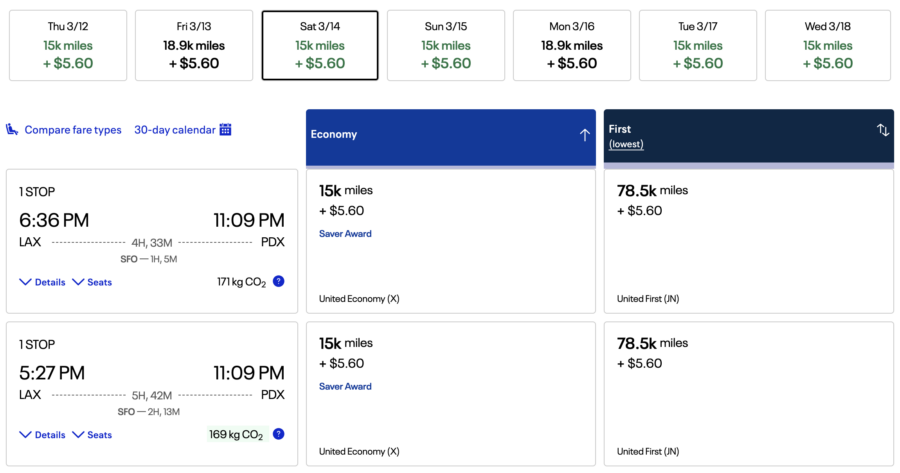
You save 5,000 miles by booking with LifeMiles instead of United miles. At the time of writing, looking just two days out, this economy ticket comes out to roughly 2 cents per mile when booking with LifeMiles
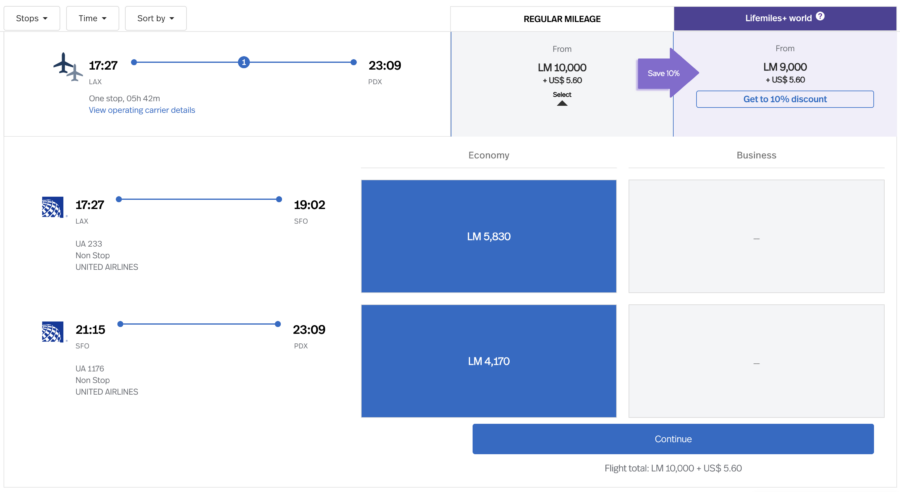
The 10,000-mile price has become common for many nonstop flights within the U.S. However, you can still find plenty at 7,500 miles as well, typically limited to connecting itineraries. There are lots of great last-minute options out there, many of even better value.
Ski in Jackson Hole for 7,500 miles each way
Airline ski routes can be expensive. But LifeMiles doesn't charge more for these flights. For example, a one-way flight from Sacremento (SMF) to Jackson Hole (JAC) costs 15,000
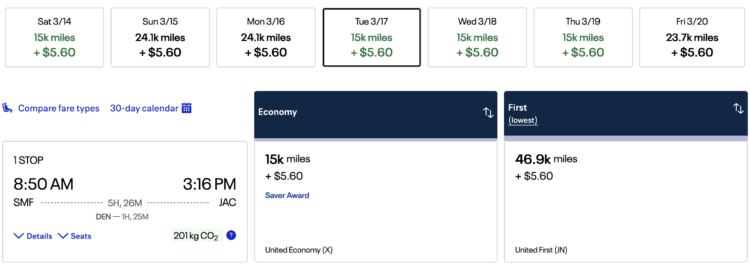
Rather than pay 15,000 United miles for this nonstop, you can get it for 7,500 LifeMiles. Even after factoring in taxes and fees, that's a redemption rate of around 3 cents per mile.
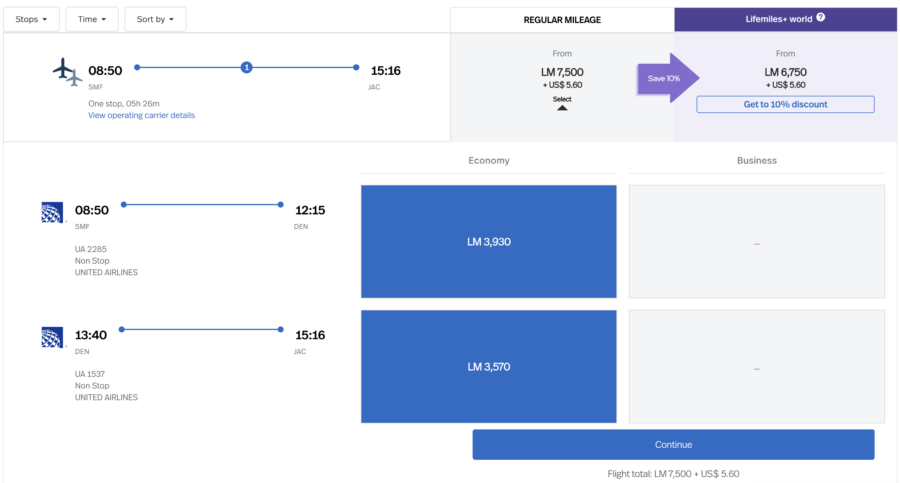
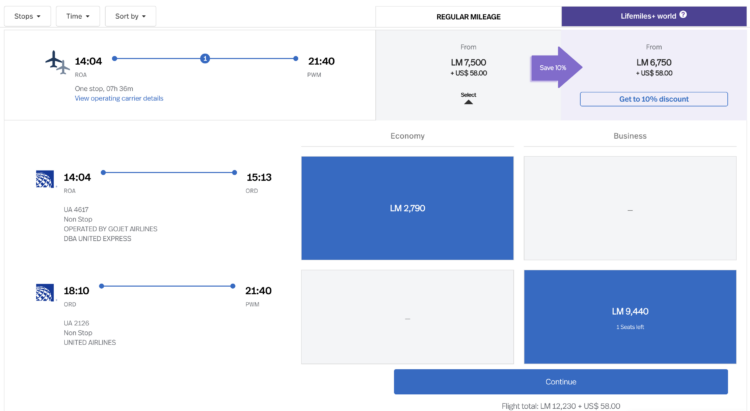
Within Region 1 itinerary: Roanoke, VA to Portland, ME
I highlight this route for a couple of reasons. First, it shows how you can get strong value on regional airport-to-airport travel by booking United flights with LifeMiles.
Second, this itinerary connects in Chicago O'Hare (ORD), which is in LifeMiles Region 2 — although the origin and destination are both within Region 1 — and it still prices as an itinerary fully within Region 1.
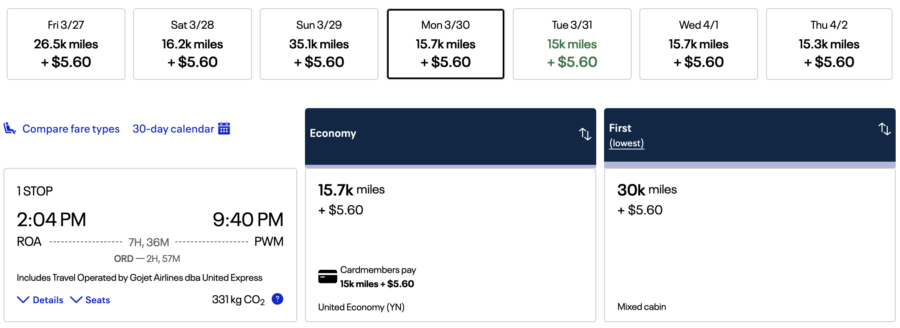
Third, the specific example I found includes a mixed-cabin itinerary with the ORD to Portland segment in domestic first, and the price is still less than what you'd pay with United for just economy.
It also reinforces the broader point: LifeMiles awards on these routes can start as low as 7,500 miles, even if economy space isn’t available in this particular case.
When Not to Book United Flights With LifeMiles
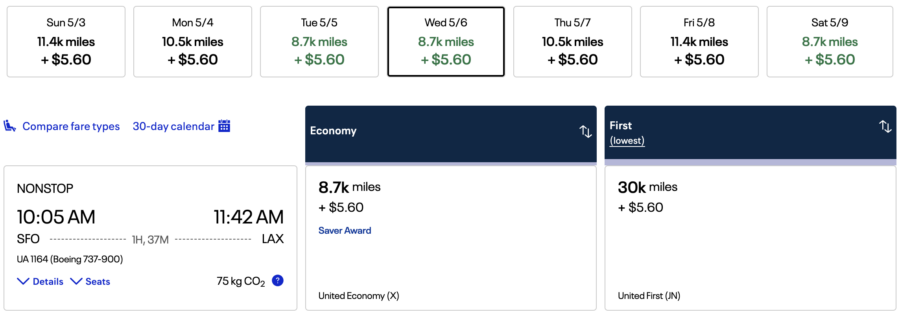
Avoid using LifeMiles for routes where cash prices are low. For many of these, United's dynamic pricing often drops its award prices to less than what LifeMiles charges. And even then, consider whether you want to use miles at all. For this San Francisco (SFO) to Los Angeles (LAX) route, I'd opt to save my miles and buy a ticket with cash.
Don't be fooled by the 8,700-mile award price. The same ticket is available for $109 cash (or $79 in Basic Economy).
It comes down to some key ideas to remember for booking United flights with LifeMiles within the United States:
- Use the LifeMiles U.S. pricing to your advantage by booking flights within a single region when possible, as these often price at 7,500 to 10,000 LifeMiles.
- Look for region-to-region routes where cash prices are always high. These are a good candidate for using LifeMiles, assuming there is Saver space. And then sometimes price better that flights to United hubs, even when they connect in that hub.
- Use LifeMiles for pricey last-minute fares where United tends to open up Saver award space while keeping cash prices high.
- Avoid United routes where cash prices are low. You'll often see low award prices with MileagePlus miles, and the value will be poor.
Final Thoughts
LifeMiles can be an incredibly useful tool for booking United flights. In my experience, the best value comes from short, regional routes within the U.S., especially when cash prices are high and United’s pricing starts around 15,000 miles. I’ve also consistently found strong value on last-minute bookings.
The examples above just scratch the surface and should give you the key ideas for what to look for. There are plenty of other routes where you should book United flights with LifeMiles.
I’ve found fewer strong uses for LifeMiles when booking United internationally, though there’s still some value. Where it really stands out is on partner bookings, since LifeMiles doesn’t pass along fuel surcharges, even on airlines that usually do.
You can also save miles with mixed-cabin itineraries, as the program uses a weighted approach (of sorts) based on how much of the flight is in business versus economy.
For rates and fees of the cards mentioned in this post, please visit the following links: Citi Strata Premier® Card (Rates & Fees)