




AwardWallet receives compensation from advertising partners for links on the blog. The opinions expressed here are our own and have not been reviewed, provided, or approved by any bank advertiser. Here's our complete list of Advertisers.
Offers for the Chase Freedom Flex® are not available through this site. Some offers may have expired. Please see our card marketplace for available offers
Since today is May 24, it feels like the perfect excuse to talk about one of the most infamous rules in the points and miles world: Chase’s 5/24 rule.
If you’ve spent any time reading award travel blogs or scrolling through points and miles forums, you’ve probably seen people casually reference being “under 5/24,” “over 5/24,” or even “lol/24” as if everyone automatically knows what that means. For newcomers, though, the rule can feel confusing and mysterious.
That's partly because Chase has never officially published a detailed explanation of its 5/24 policy. Instead, the points and miles community has pieced it together over the years through shared experiences and countless data points. While unofficial, the rule has proven consistent enough that many travelers now build their entire card strategy around it.
In this post, we'll cover how the Chase 5/24 rule works, how to check your status, which cards are affected, and how to build a smart application strategy around it.
Page Contents
The Chase 5/24 Rule Explained
Put simply, Chase will deny your new card application if you've opened five or more card accounts from any bank in the previous 24 months — thus, “5 in 24” or just 5/24.
When you apply for a new card, Chase will obtain a copy of your credit report from one of the three major credit bureaus: Experian, Equifax, and TransUnion. If your personal credit history shows at least five credit card accounts with an “opened date” in the last 24 months, Chase will likely reject your credit card application.

What Counts Toward My 5/24 Status?
At its core, the rule is pretty simple: if a credit card account shows up on your credit report, it generally counts toward your 5/24 total. But since we’re not all experts on credit reporting, here are a few things to remember.
Which cards count toward 5/24?
- All card issuers: Chase counts the
credit cards - Even closed cards count: Closing a credit card does not remove it from your credit report. If you have opened the card within the past 24 months, it will still count toward your 5/24 status.
- Authorized user cards may count too: If you're an authorized user on someone else’s credit card account, the bank may report that account to your credit report. If so, it will count toward your 5/24 status. However, you may be able to remove it from your report. More on that below.
What credit lines don't count toward 5/24?
- Unsuccessful credit card applications do not count toward your 5/24 status. They will show as an inquiry on your report, but only new accounts that you successfully open count.
- Many business cards do not appear on your personal credit report, and therefore, they won't count toward your 5/24 status. See below for more information on the business cards that count.
- Other types of credit accounts on your credit report, such as mortgages, student loans, and car loans, do not factor into your 5/24 status.
Which Chase Cards Are Subject to Chase's 5/24 Rule?
If you’re planning to apply for a new Chase card, it’s safest to assume that both Chase personal and business cards are subject to the 5/24 rule. When this restriction was first introduced, it only applied to a few specific cards. However, in 2018, Chase expanded the restriction to virtually all Chase cards — even no-annual-fee cards like the Chase Freedom Flex®.
Are there ever exceptions? Quite possibly. Over the years, we have seen many reports of Chase credit card approvals that should've been rejections based on 5/24 status.

Some have speculated that the rule isn’t always enforced for certain co-branded cards. Some suggest Chase's “Just For You” offers or those from targeted mailers might bypass the 5/24 rule. Perhaps Chase bends the rules for customers who meet specific additional criteria, such as Chase Private Client customers. Long story short, there's no hard evidence to support these claims. And without more transparency from Chase, it's tough to know for sure.
The best approach is to plan your card applications accordingly. If you're under 5/24, prioritize getting Chase cards. Then, pursue cards from other issuers later. This way, you'll avoid rolling the dice on an unnecessary hard pull to your credit report.
Related: Chase Credit Cards: Best-Ever Offers and When You Should Apply
How Can I Check My 5/24 Status?
You can check your 5/24 status through several free methods. Here are our favorite options.
Credit Karma
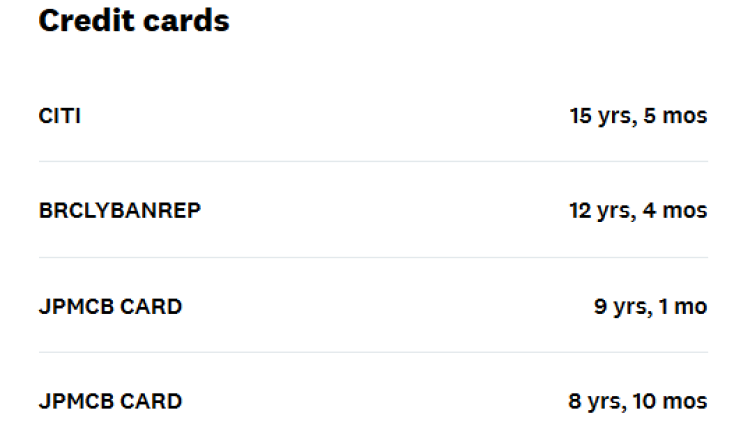
Credit Karma will show you your Equifax and TransUnion credit reports. Click on the report you'd like to view and scroll down to “Credit Age.” You'll then see a list of your cards and the age of each account. After checking everything, total the number of credit card accounts you've opened in the past two years.
Travel Freely
The Travel Freely app allows you to enter your card opening dates manually and will track your 5/24 status. But of course, this requires you to enter each card as you open it. It can be a handy way to keep track without the use of a spreadsheet, but it requires a bit of legwork up front to enter all of the data.

Do Business Cards Factor Into My 5/24 Status?
If you want to apply for a Chase business card, Chase will still look at your 5/24 status when deciding whether to approve you.
However, that doesn’t mean every business card you open will add to your 5/24 count. Most business cards, including Chase business cards, typically don’t appear on your personal credit report as new accounts. Since 5/24 is based on accounts reported to your personal credit report, those cards won’t increase your count.
The exception: Some issuers do report business cards to personal credit reports, which means those accounts could count toward 5/24.
Quick recap:
- All personal credit cards from every issuer are recorded on your credit report and count toward your 5/24 status.
- Business credit cards from
Capital One - Business credit cards from
American Express - Capital One says it doesn't report its business charge cards (those with no preset spending limit) to your personal credit report, so long as the account is in good standing.
Related: Am I Eligible for a Small Business Card?
How Authorized User Accounts Affect 5/24
If you're an authorized user on someone else's personal credit card account, this account will show up on your credit report and count toward your 5/24 status. Thankfully, you're not stuck with this mark on your Chase 5/24 status. You can have authorized user accounts removed from your 5/24 status in two ways.

Related: Does Being an Authorized User Affect Your Credit?
The first step is to ask the primary account holder to remove you as an authorized user. Once they do, contact the credit reporting agencies to have the authorized user account removed from your report.
Remember to only do this for authorized user accounts opened in the last 24 months. You don't need to remove older authorized user accounts for the sake of 5/24 status. Those won't affect your Chase 5/24 number; these accounts can help build your credit history.
The other option is to try working with Chase's reconsideration department after a denial. Some Chase card applicants have reported success asking Chase to exclude authorized user accounts from their 5/24 count during reconsideration.
For example, let’s say you’ve opened four personal credit cards in the past 24 months, and you’re also listed as an authorized user on two other accounts opened during the same timeframe. This means you would be considered 6/24 and likely ineligible for automatic approval. But you can ask a Chase reconsideration agent to remove the two authorized user accounts from consideration. They can quickly analyze your credit report and see that you're under 5/24.
Not everyone is going to like this method. After all, this requires applying for a Chase card with the knowledge that you'll likely be denied at first. Then, you'll need to call Chase's reconsideration desk, which is a process that some may find intimidating. And you aren't guaranteed that they will approve you. But this process is worth it for those who don't want to go through the trouble of removing authorized user accounts from their credit report.

What if I'm Already Over 5/24?
If you're already over 5/24, you have a tough decision. Should you avoid opening new personal credit cards while you wait for some of your existing accounts to age out of the 24-month timeframe?
Option 1: Wait it out
If you're only a few months away from dipping back under 5/24, it might be smart to press pause on any new personal card applications. Holding off now could mean unlocking access to some of Chase’s most valuable welcome offers in just a short time.
Option 2: Shift focus to business cards
You could also focus on business cards if you're eligible. That way, you can keep earning welcome bonuses and points without jeopardizing your future Chase eligibility. Just make sure to stick to the listed banks above that don't typically report business cards on your personal credit.
Option 3: Move on from Chase
If it'll be a while before you're under 5/24, consider the opportunity cost of waiting. It might make more sense to continue pursuing valuable sign-up bonuses with other banks rather than changing your strategy to get in Chase's good graces.
Final Thoughts
Chase issues some of the best
If you're currently over 5/24, getting back under the limit can take some patience. In some cases, though, waiting is the smarter long-term move if it gives you access to Chase’s most valuable welcome bonuses and transferable points ecosystem. For beginners especially, building your early application strategy around the 5/24 rule can help you secure Chase cards first before branching out to other issuers later.

$95Rates & Fees
- 5X points on Lyft rides through September 2027
- 5X points on travel purchased through Chase Travel℠
- 3X points on dining at restaurants worldwide
- 3X points on gas and EV charging
- 3X points on vacation homes at top brands like Airbnb, Vrbo and more
- 3X points on eligible streaming services
- 3X points on online grocery purchases (excluding Target, Walmart, and wholesale clubs)
- 2X points on all other travel
- 1X point per dollar spent on all other purchases

$795Rates & Fees
- 8x points on all purchases through Chase Travel℠
- 4x points on flights and hotels booked directly
- 3x points on dining worldwide
- 1x points on all other purchases

$95Rates & Fees
- 3X points per $1 on the first $150,000 spent in combined purchases on travel, shipping purchases, Internet, cable and phone services, advertising purchases made with social media sites and search engines each account anniversary year
- 1X point per $1 on all other purchases
For rates and fees of the cards mentioned in this post, please visit the following links: Chase Sapphire Preferred® Card (Rates & Fees), Chase Sapphire Reserve® (Rates & Fees), and Ink Business Preferred® Credit Card (Rates & Fees)