








AwardWallet receives compensation from advertising partners for links on the blog. The opinions expressed here are our own and have not been reviewed, provided, or approved by any bank advertiser. Here's our complete list of Advertisers.
Understanding airline alliances and partnerships is crucial for mastering the travel
Most airlines work with other carriers through alliances or individual partnerships. In this post, we’ll focus specifically on airline alliances — explaining why they matter and how you can maximize the value of your miles and points by taking advantage of them.
Page Contents
- Why Should You Care About Airline Alliances and Partnerships?
- Why Do Airline Partnerships Exist?
- Utilize Airlines Partnerships to Maximize Flexible Points
- Score Better Award Rates on the Same Flight
- The Three Major Airline Alliances
- Individual Airline Partners
- How Airline Alliances and Partners Benefit Travelers
- Earning Miles With Partner and Alliance Airlines
- How to Plan a Trip With Partner Airlines
- Final Thoughts
Why Should You Care About Airline Alliances and Partnerships?
Most travelers know that
While you can redeem miles exclusively on the airline that issued them, ignoring partner airlines means missing out on thousands of additional flights — including routes to destinations your primary airline doesn’t serve. In many cases, booking partner flights can also require fewer miles.
Beyond opening up additional award redemptions, airline alliances make it easier to travel across multiple airlines on a single itinerary.
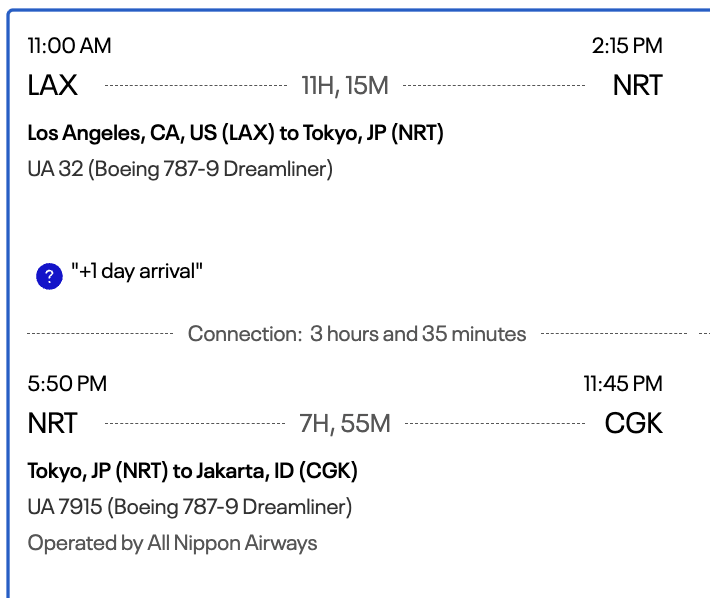
If you book a flight to Jakarta, Indonesia on United's website, you won't fly all the way there with United. You might connect with All Nippon Airways (ANA) or even Asiana Airlines. Even so, the itinerary is issued as a single ticket, and checked baggage will be transferred automatically between the airlines.
Why Do Airline Partnerships Exist?
Airline partnerships and alliances exist to give one carrier access to another's route network. While these relationships serve several purposes, the biggest benefit for travelers is expanded access to destinations around the world. For example, it's not feasible for a U.S.-based carrier to serve every destination in Europe, so these carriers utilize the route networks operated by major European carriers.
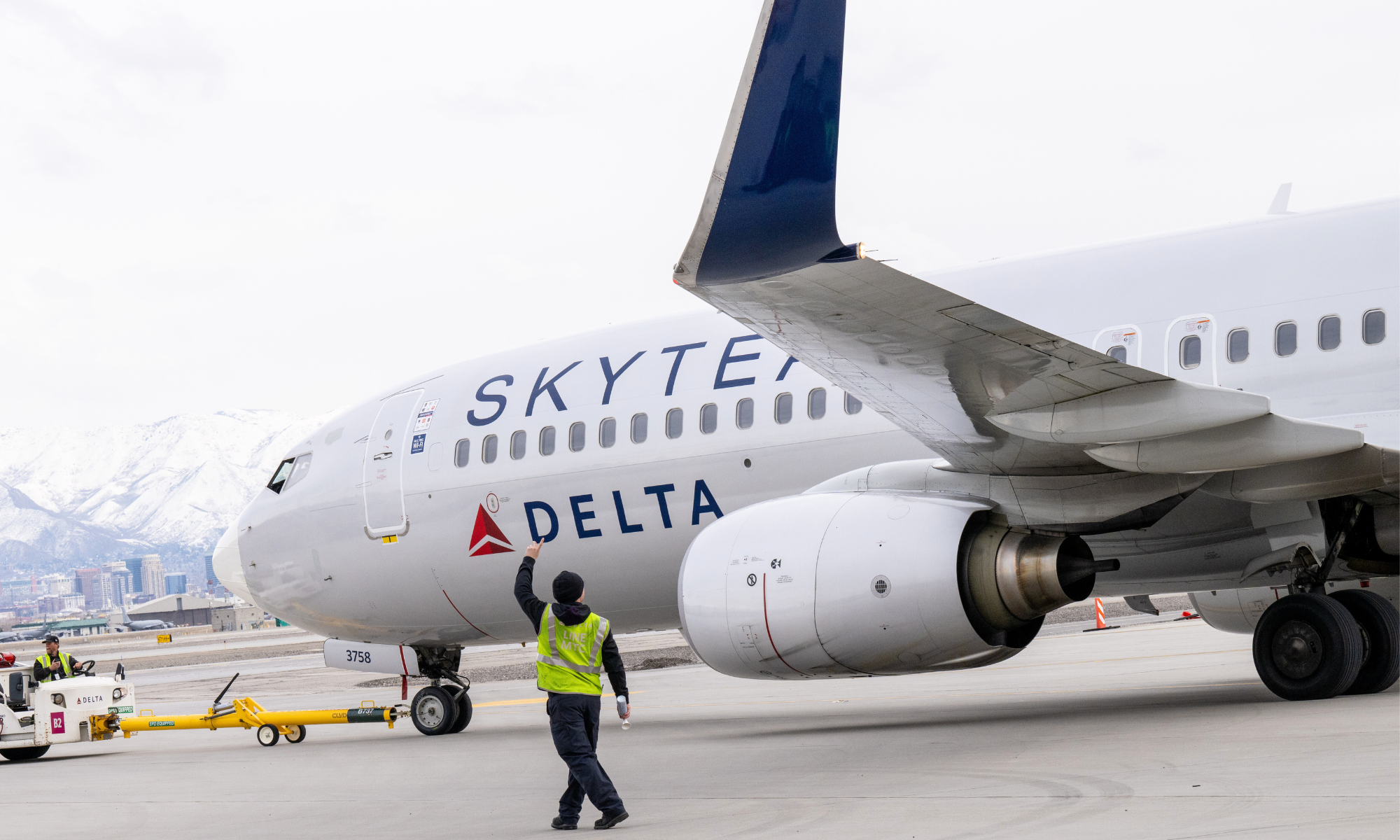
One example is Delta Air Lines’ long-standing partnership with Air France and KLM. This relationship makes it possible to travel from New York (JFK) to the relatively small city of Split, Croatia (SPU), with just one connection in either Amsterdam (AMS) or Paris (CDG). You can even redeem Delta SkyMiles for this itinerary.
AAdvantage members and American Airlines
American Airlines and Delta Air Lines aren’t unique in partnering with major international carriers. Because of these relationships, miles earned with U.S.-based airlines can take you much farther than you might expect.
Utilize Airlines Partnerships to Maximize Flexible Points
Beyond opening more routes, airline alliances can also give you additional flexibility when redeeming points and miles.
Let's say you want to fly from New York (JFK) to Los Angeles (LAX) on American Airlines but don’t have enough AAdvantage miles to book the flight. Luckily, you can book the same award through a partner program. Oneworld partner British Airways often has access to the same American Airlines award space.
Unlike American Airlines, which only partners with Citi for transferable points, British Airways Avios can be converted from several major bank programs, including:
So, if you don't have enough AAdvantage miles for your flight, you can transfer points to your Avios account to book it through British Airways instead.
Score Better Award Rates on the Same Flight
In addition to expanding bank transfer partner options, airline alliances create opportunities to redeem fewer miles.
Looking at our Delta and Air France example from earlier, you can see that a flight from New York (JFK) to Paris (CDG) costs 40,000 miles for economy and 82,000 miles for premium when booked through Delta with SkyMiles. Further, it doesn't show any availability for business.
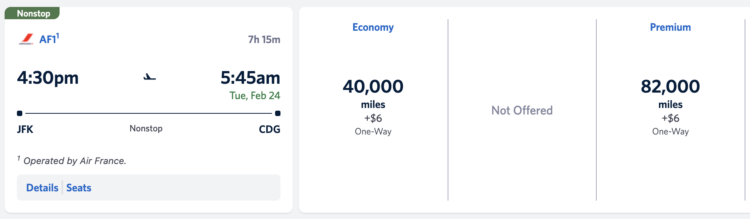
However, this same flight costs just 18,750 miles for economy, 40,000 miles for premium, and 60,000 miles for business class when booked through Air France. Understanding airline alliances helps save miles and opens up other seating options in this scenario.

If you're wondering why there are different prices or which flights you can book with miles, check out these two posts for beginners:
Now let's look at the partnerships and alliances that can supercharge your rewards strategy.
The Three Major Airline Alliances
Airline alliances are large networks of partner carriers. Rather than forming individual partnerships with each airline, alliance members operate under a shared set of rules that apply across the entire alliance. That said, airlines are still free to form deeper partnerships with certain members if they choose.
There are three major airline alliances:
- Star Alliance
- Oneworld
- SkyTeam
Star Alliance
The first global airline alliance, Star Alliance, was formed in May 1997 with just five member airlines. Today, it’s the largest of the three major airline alliances, with over 25 members.
Star Alliance is the only alliance with member airlines based on all six inhabited continents. It’s also the only alliance to partner with a rail provider, Germany's Deutsche Bahn.
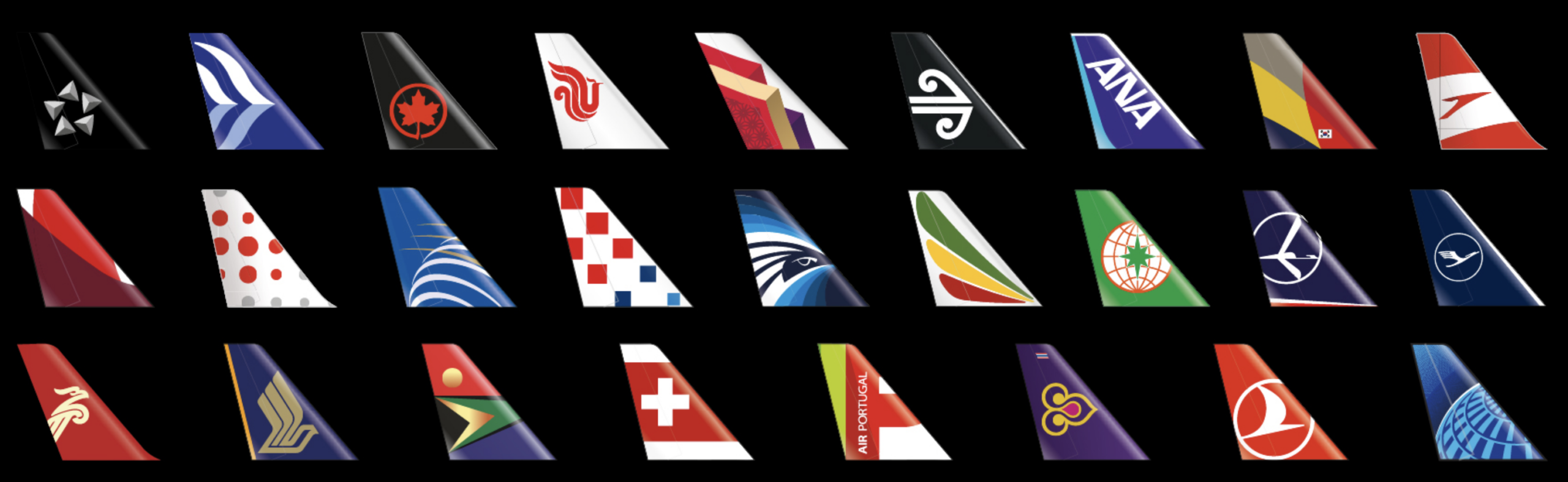
Star Alliance members and frequent flyer programs
| Member Airline | Frequent Flyer Program |
|---|---|
| Aegean Airlines | Miles+Bonus |
| Air Canada | Aeroplan |
| Air China | PhoenixMiles |
| Air India | Maharaja Club |
| Air New Zealand | Airpoints |
| ANA | ANA Mileage Club |
| Asiana Airlines | Asiana Club |
| Austrian Airlines | Miles & More |
| Avianca | LifeMiles |
| Brussels Airlines | Miles & More |
| Copa Airlines | ConnectMiles |
| Croatia Airlines | Miles & More |
| Egyptair | Egyptair Plus |
| Ethiopian Airlines | ShebaMiles |
| EVA Air | Infinity MileageLands |
| ITA Airways | Miles & More |
| LOT Polish Airlines | Miles & More |
| Lufthansa | Miles & More |
| Shenzhen Airlines | PhoenixMiles |
| Singapore Airlines | KrisFlyer |
| South African Airways | Voyager |
| SWISS | Miles & More |
| TAP Air Portugal | TAP Miles&Go |
| Thai Airways | Royal Orchid Plus |
| Turkish Airlines | Miles & Smiles |
| United Airlines | MileagePlus |
Oneworld
The Oneworld alliance (stylized with a lowercase “o” as oneworld) was formed in February 1999 and currently consists of 16 member airlines. It is the smallest of the three major airline alliances, but it's growing quickly. The most recent additions were Alaska Airlines in March 2021, Fiji Airways in March 2025, Oman Air in June 2025, and Hawaiian Airlines in April 2026.
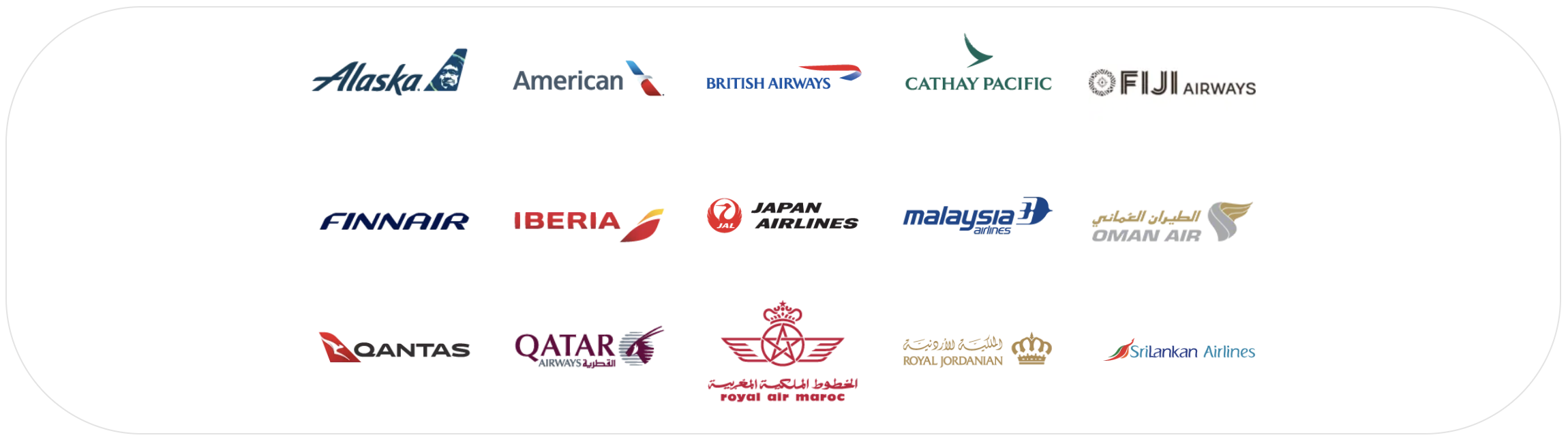
After LATAM Airlines left Oneworld in 2020, the alliance lost much of its presence in South America. And it’s also worth noting that Oneworld once had an extensive route network in Russia through member airline S7 Airlines. However, following Russia’s invasion of Ukraine, S7’s membership is currently suspended.
Oneworld members and frequent flyer programs
| Member Airline | Frequent Flyer Program |
|---|---|
| Alaska Airlines | Atmos Rewards |
| American Airlines | AAdvantage |
| British Airways | Club (Avios) |
| Cathay Pacific | Asia Miles |
| Fiji Airways | AAdvantage |
| Finnair | Finnair Plus |
| Hawaiian | Atmos Rewards |
| Iberia | Club (Avios) |
| Japan Airlines | JAL Mileage Bank |
| Malaysia Airlines | Enrich |
| Oman Air | Sindbad |
| Qantas | Qantas Frequent Flyer |
| Qatar Airways | Privilege Club (Avios) |
| Royal Air Maroc | Safar Flyer |
| Royal Jordanian | Royal Club |
| SirLankan Airlines | FlySmiLes |
| Fiji Airways | Tabua Club / AAdvantage |
| S7 (Suspended) | S7 Priority (Suspended) |
SkyTeam
SkyTeam is the second-largest airline alliance. It was formed in 2000 by just four carriers but has grown to 18 with the most recent addition being SAS, which joined in September 2024. The second most recent addition was Virgin Atlantic.
SkyTeam’s members are well distributed around the world, including a strong presence in Asia, where six member airlines are based.

Similar to S7’s suspension from Oneworld, Russia’s national carrier, Aeroflot, is currently suspended from the SkyTeam alliance following Russia’s invasion of Ukraine.
SkyTeam members and frequent flyer programs
| Member Airline | Frequent Flyer Program |
|---|---|
| Aerolíneas Argentinas | Aerolíneas Plus |
| Aeroméxico | Aeroméxico Rewards |
| Air Europa | Suma |
| Air France | Flying Blue |
| China Airlines | Dynasty Flyer |
| China Eastern Airlines | Eastern Miles |
| Delta Air Lines | SkyMiles |
| Garuda Indonesia | GarudaMiles |
| Kenya Airways | Asante Rewards |
| KLM | Flying Blue |
| Korean Air | SKYPASS |
| Middle East Airlines | Cedar Miles |
| Saudia | Al Fursan Loyalty |
| TAROM | Flying Blue |
| Vietnam Airlines | Lotusmiles |
| Virgin Atlantic | Flying Club |
| XiamenAir | Egret Miles |
| Aeroflot (Suspended) | Aeroflot Bonus (Suspended) |
Individual Airline Partners
Not every airline belongs to a global alliance. Many carriers prefer to operate independently, as it provides more freedom for the airline to implement its own strategic partnerships. Most global carriers are also far too small to participate in major alliances.
However, not every independent airline is small. For example, Etihad Airways, Emirates, LATAM, and JetBlue don’t belong to any alliance but maintain strategic partnerships with airlines around the world.
Previously, JetBlue maintained a close partnership with American Airlines. However, the United States Department of Justice determined the partnership violated antitrust laws. Now, JetBlue partners with United Airlines via its BlueSky partnership, offering reciprocal miles-earning and redeeming.
How Airline Alliances and Partners Benefit Travelers
Airline partnerships can simplify travel and make elite status more rewarding. When your itinerary includes multiple airlines, you usually can get your boarding passes for the whole trip when you check in for your first flight. Your bags can be checked to your final destination, and the minimum time to connect between partners is usually shorter.
Most airline partnerships also have reciprocal elite benefits. That means your elite status and benefits — like free checked bags, airport lounge access, and flight upgrades — will apply to partner flights, too.
Another key feature of many partnerships is the ability to earn and redeem miles with partners. However, this feature varies and may not apply, depending on the airlines and the type of partnership.
Related: Guide to Oneworld Lounges and How To Access Them
Earning Miles With Partner and Alliance Airlines
When you pay for a flight with money instead of miles, you typically can choose to earn miles with a partner airline's frequent flyer program.
If you rarely fly with Aegean Airlines, it doesn't make sense to accrue a few thousand Aegean miles that will be hard to redeem. Instead, when buying a flight on Aegean's website, you could decide to credit that flight to a program you'll use more often, such as United Airlines MileagePlus or Singapore Airlines KrisFlyer.
Just like frequent flyer programs can have different award prices for the same flight, they also differ in how many redeemable miles (what you need for booking award tickets) they earn for partner flights. For example, an economy flight on Aegean Airlines earns twice as many miles when credited to Singapore KrisFlyer compared to United MileagePlus. You can learn all about this topic in our post on where to credit miles.
In the case of airlines not affiliated with any major alliance — but that still maintain individual partnerships with other airlines — determining whether you can earn or redeem miles takes a little research. Luckily, you can find your answer to whether or not a partnership allows you to earn or redeem miles on each airline's website.
How to Plan a Trip With Partner Airlines
As we mentioned earlier, knowing how (and when) to redeem miles with partners is key to maximizing your rewards. The right strategy can save you cash and miles and get you to less popular destinations faster. Let's take a look at how you can use your knowledge of partners to plan your next trip.
Your first step will be to figure out what partnerships are relevant. You might be starting your search with a destination in mind. In other cases, you might want to explore where you can go with the points and miles you already have.
Related: How To Find Airline Partner Award Flight Availability
Working backward from a destination
Suppose you’re planning a vacation to Tuscany and want to fly into Florence (FLR). The first step is identifying which airlines serve Florence and which partnerships you might be able to use.
Several tools can tell you which airlines serve Florence. My favorite way is through FlightConnections.com. This gives you a visual of the direct routes to or from a particular airport. You can also view the airport's Wikipedia page, though this gives you a list of connecting airports and not a visual.
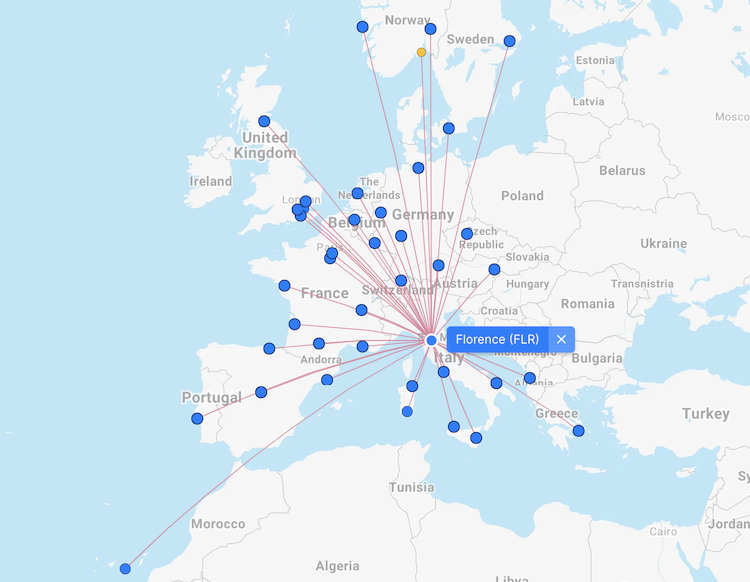
Another free tool is FlightsFrom.com, which also shows a complete list of direct flights. You can filter by destination (flights between Florence and Dallas) and limit the results to a single airline or alliance (SkyTeam flights from Florence).
Once you have a list of prospective airlines, the next step is determining which rewards programs allow you to book those flights with points or miles. Global airline alliances provide a helpful shortcut, as you can often redeem miles with any member airline.
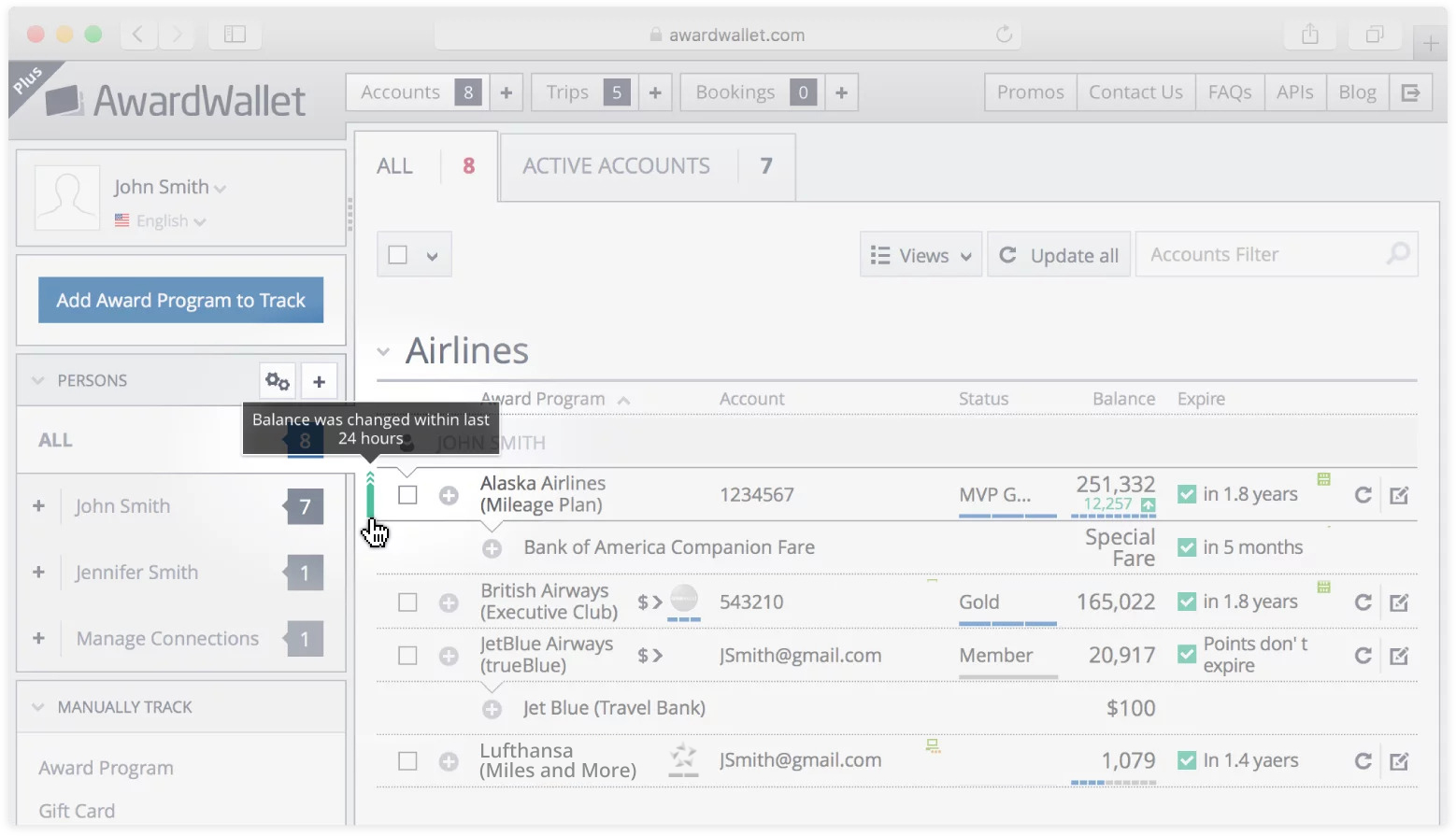
If you're planning to book soon, your options will be limited by the program with which you already have points or miles. Checking your rewards balances should be quick and easy if you're using AwardWallet to track your rewards.
Don't have an AwardWallet account yet? Sign up for free and track unlimited rewards programs and travel plans.
But if you're planning a trip further down the line, keep the search broad. That way, you can plan your points-earning strategy and credit card applications around the programs that make the most sense.
The last step is to check pricing and determine if using one frequent flyer program currency over another offers any advantages. If you haven't already, make sure to review our guide to frequent flyer pricing.
Related: A Beginner's Guide To Building a Credit Card Application Strategy
Let the opportunities decide your next destination
If your heart isn't set on a specific destination, you can let the points and miles do the talking. Every frequent flyer program offers unique advantages. Some programs are great for a short weekend getaway. Others can facilitate ambitious round-the-world trips that will keep you busy in retirement.
For open-ended exploration, you'll find our posts on award sweet spots especially useful. Each focuses on a specific
Don't forget that transferable points can be redeemed for a wide range of options.
Turning your miles into a confirmed ticket
Booking with miles isn't nearly as straightforward as buying a flight with cash. You can redeem miles for a small percentage of the seats available for sale. We explain why and how to take the next step when you're ready to book in our guide to frequent flyer availability. If you're new to points and miles, this essential reading can save you lots of time and frustration.
Need more help? Ask in our Award Travel 101 Facebook community or send a request to our award flight booking service.

Final Thoughts
Airline alliances and partnerships are a critical part of using points and miles. If you limit redemptions to the airline where you earned your miles, you’re only accessing a fraction of the available award flights.
Using the wrong rewards can mean spending more miles or paying higher taxes for your flight. Without partner airlines, your list of possible destinations also shrinks dramatically. And even if you can reach your destination, you'll likely spend more time on a plane when partners or alliance airlines could have gotten you there with fewer connections.
On the other hand, the right rewards can open up creative routing opportunities like stopovers or open jaws. Once you know your options, you can compare prices and booking rules to pick the program that best fits your trip.














![Pros and Cons of Adding an Authorized User to Rewards Credit Cards [2026]](https://awardwallet.com/blog/wp-content/uploads/2023/10/Kampus-Production-Pexels-credit-card-featured.png)

